In many everyday cases, provided that the tooth, bite, crown design and home care routine are suitable, patients can expect zirconia crowns to last for approximately 10 to 15 years on both front and back teeth, and sometimes even longer.
Zirconia crowns are designed as durable, tooth-coloured restorations for teeth requiring an aesthetic appearance and long-term protection following damage, decay, root canal treatment or severe wear.
However, if the zirconia crown is not fitted by an experienced prosthodontist, if low-quality zirconia is used, and if the patient does not maintain good oral hygiene and attend regular dental check-ups, it is unlikely that the zirconia crown will have a long lifespan of 10–15 years.
Understanding Zirconia Crowns
Zirconia crowns have become a popular choice for long-lasting and aesthetically pleasing restorations on both front and back teeth. These crowns are made from zirconium dioxide, a type of ceramic known for its exceptional strength and durability.
Unlike traditional porcelain crowns, zirconia is less prone to breaking or cracking. Consequently, this makes it an excellent choice for teeth subjected to significant stress and wear.
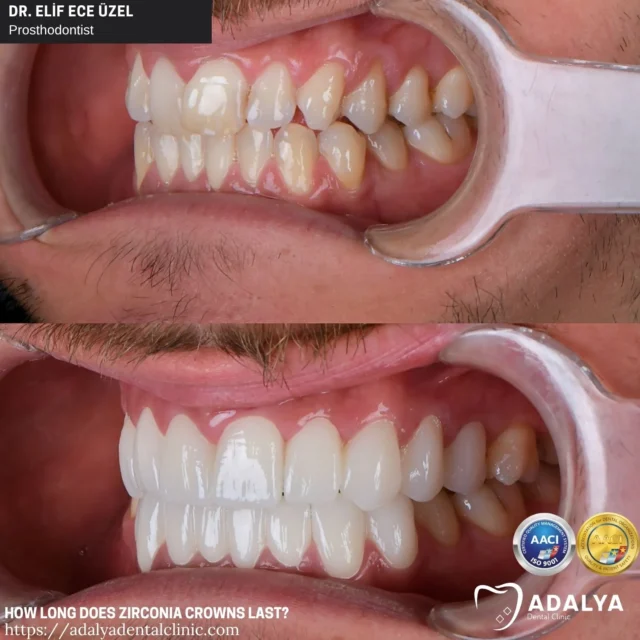
The material’s biocompatibility also means there is a lower likelihood of adverse reactions, making zirconia crowns a safe choice for many patients.
When it comes to the lifespan of zirconia crowns, several factors come into play. However, patients who maintain excellent oral hygiene and follow their dentist’s recommendations are more likely to experience the maximum lifespan of their zirconia crowns.
How Long Do Zirconia Crowns Last On Average?
On average, zirconia crowns last for at least 10-15 years with proper use and care. However, this period may be extended further provided there is good oral hygiene and careful use.
Furthermore, a systematic review and meta-analysis reported that, depending on the studies included and the clinical conditions, the overall survival rates of single zirconia crown over a 10-year period ranged from 92.9% to 98.7%.
Zirconia is known for high durability and the ability to tolerate heavier chewing forces than many other ceramic crown materials, which is why it is commonly chosen for for front and molars and patients with stronger bites.
3D Smile Design Technology with Adalya Dental Clinic
Great Results in Zirconia Crowns & All Treatments in Turkey
Get In Touch With Adalya Dental Clinic!
How Long Do Zirconia Crowns Last On Front Teeth?
Zirconia crowns generally can last for at least 10–15 years on front teeth. However, front teeth face different demands to molars. Front crowns are generally subjected to less chewing pressure than molars. However, they face higher aesthetic demands.
Consequently, a front zirconia crown may need to be replaced not so much because it has fractured, but rather due to changes at the gum line, the colour no longer matching the neighbouring teeth, or the shape no longer complementing the smile.
For this reason, depending on a patient’s aesthetic expectations, zirconia crowns on front teeth may be removed sooner—even if they have not yet reached the end of their natural lifespan—to achieve more aesthetically pleasing results.
How Long Do Zirconium Crowns Last On Molars?
The reasonable expectation for many patients is that zirconium crowns fitted to a molar will last for approximately 10 to 15 years. However, this period can generally be extended further provided the patient uses the tooth with care and all conditions for its maintenance are favourable.
But a molar crown sits in the highest-pressure chewing zone of the mouth, so it faces repeated force every day. If the crowned tooth has a short shape, a history of deep decay, gum recession, root canal treatment, or an uneven bite, the crown may need repair or replacement sooner.
Contact Us > Whatsapp
Important Factors Determining The Lifespan of Zirconium Crowns
A zirconia crown does not fail simply because the zirconia fractures. In fact, many crown-related problems originate around the crown: cement leakage, the gum line, occlusal contact points or the remaining natural tooth.
Understanding these factors helps explain why individuals can achieve such different results with the same material and how long zirconia crowns will last from person to person.
Factors Affecting the Longevity of Zirconia Crowns
- Bite force and grinding: Clenching and grinding can place repeated stress on the crown, the cement, and the natural tooth underneath.
- Crown fit and margin quality: A precise fit helps reduce places where plaque can collect and where leakage or decay may begin.
- Tooth condition before treatment: A crown on a heavily cracked, root canal-treated, or structurally weakened tooth may have a different prognosis than a crown on a more stable tooth.
- Oral hygiene: Zirconia itself cannot get a cavity, but the tooth edge beneath the crown still can.
- Gum health: Inflammation, recession, and periodontal disease can expose margins and reduce support around the tooth.
- Cementation and bonding protocol: Zirconia requires appropriate surface treatment and cement selection; technique matters.
- Crown design: Thickness, contour, bite adjustment, and whether the crown is monolithic or layered can influence long-term performance.
Polished zirconium crown is more wear-resistant than feldspathic porcelain used in metal-ceramic crowns, and therefore offers a longer–lasting treatment.
looking for dental treatments abroad?
Affordable Turkey Teeth Package Deals With Us
Check Out Our Pages And Reach Our Expert Team
Signs That Your Zirconia Crown May Need Attention
Even if a problem begins to develop beneath a zirconia crown, the crown may still feel completely normal. However, regular check-ups can help identify any issues, ensuring that zirconia crowns can last for many years in patients’ mouths. This is precisely why dental check-ups are so important.
If you are neglecting your regular dental check-ups, you should be on the lookout for these signs, which may indicate a problem with your zirconia crowns.
Watch Out for These Signs to Ensure Flawless Zirconia Crowns:
- Sensitivity that appears suddenly or keeps getting worse
- Pain when biting or releasing pressure
- A crown that feels high, loose, or mobile
- Food catching around the crown margin
- Bleeding or swelling around the crowned tooth
- A visible crack, chip, or rough edge
- Bad taste or odor near the crown
- Gum recession that exposes the crown edge
Some of these signs may indicate more serious problems and the need for a zirconium crown replacement.
Signs That Your Zirconia Crown May Need Replacement
- Visible wear, crack, chipping, or rough edge.
- Discomfort and increasing pain.
- Gum recession.
- Changes in your bite.
- Ill-fitting crown
With regular check-ups, a dentist can determine whether the crown can be adjusted, repaired, recemented, monitored, or replaced.
As Adalya Dental Clinic, we have a very low rate of negative outcomes in zirconia crown treatments in Turkey, and our patients use their crowns without any problems for a minimum of 10 years or more.
Maintenance Tips for Prolonging the Life of Zirconium Crowns
Proper care is one of the key factors affecting the lifespan, appearance and functionality of zirconia crowns. And one of the most important parts of this care is practising good oral hygiene.
This includes brushing your teeth at least twice a day with a fluoride toothpaste, flossing daily to remove plaque and food particles, and using an antibacterial mouthwash to reduce the risk of gum disease and tooth decay.
Now let’s explain, one by one, all the care and habits that affect how long zirconium crowns last and their health.
How to Help A Zirconia Crown Last Longer
- Brush twice daily with a soft-bristled toothbrush.
- Clean between teeth every day with floss, interdental brushes, or a water flosser if recommended.
- Pay special attention to the gumline where the crown meets the tooth.
- Keep regular dental exams and professional cleanings.
- Ask about a nightguard if you clench or grind.
- Avoid chewing ice, pens, hard candy, and other objects that can stress restorations.
- Do not use crowned teeth to open packages or bite non-food items.
- Tell your dentist if your bite feels uneven after crown placement.
- Manage dry mouth, reflux, or high cavity risk with professional guidance.
FAQ'S
You can find more informations about zirconium crowns by examining frequently asked questions.
The price range for zirconium crowns varies between $1,200-$2,000 in the US, £600-£1,000 in the UK, and €500-€1,200 in Germany. However, zirconium crowns prices in Turkey ranges from £125-£200 ($170-$270).
Zirconia crowns are generally regarded as safe dental crowns for the when used appropriately by a qualified dental professional.
In dentistry, “zirconia crown” usually refers to a crown made from zirconia, or zirconium dioxide, a ceramic material valued for strength, chemical stability, and tissue compatibility.
Zirconium crowns are fixed and long-lasting restorations. However, it would be a bold claim to say they are permanent lifetime. Nevertheless, with good care, oral hygiene, and overall health, some individuals do use them for a lifetime.
The key factors here are good oral hygiene, healthy gums, careful use, and good overall health.
There is no single winner for every mouth, but there are reliable patterns dentists use when recommending zirconia crowns. The most suitable material is usually chosen by matching the crown’s job to the patient’s bite and cosmetic goals.
However, monolithic zirconia is a better option for those with excessive teeth grinding problems and for posterior tooth restorations. But for those who want higher aesthetics and a more natural look, especially in front teeth, high-translucent, multilayer, or layered zirconia crowns are more suitable.
Zirconia crowns are often better than porcelain crowns when strength and chip resistance are the main goals. However, porcelain can be better when maximum translucency and enamel-like beauty are the priority.
Zirconia crowns are resistant to staining, but they are not completely immune to discoloration in the broader sense. The zirconia itself does not stain like natural enamel.
But surface glaze, cement edges, plaque buildup, scratches, smoking, coffee, tea, red wine, and poor polishing can affect how the zirconium crown looks over time.
One of the most significant advantages of zirconium crowns is their longevity and durability. Because zirconium dioxide, the material used to make these crowns, is incredibly strong and resistant to wear and fracture.