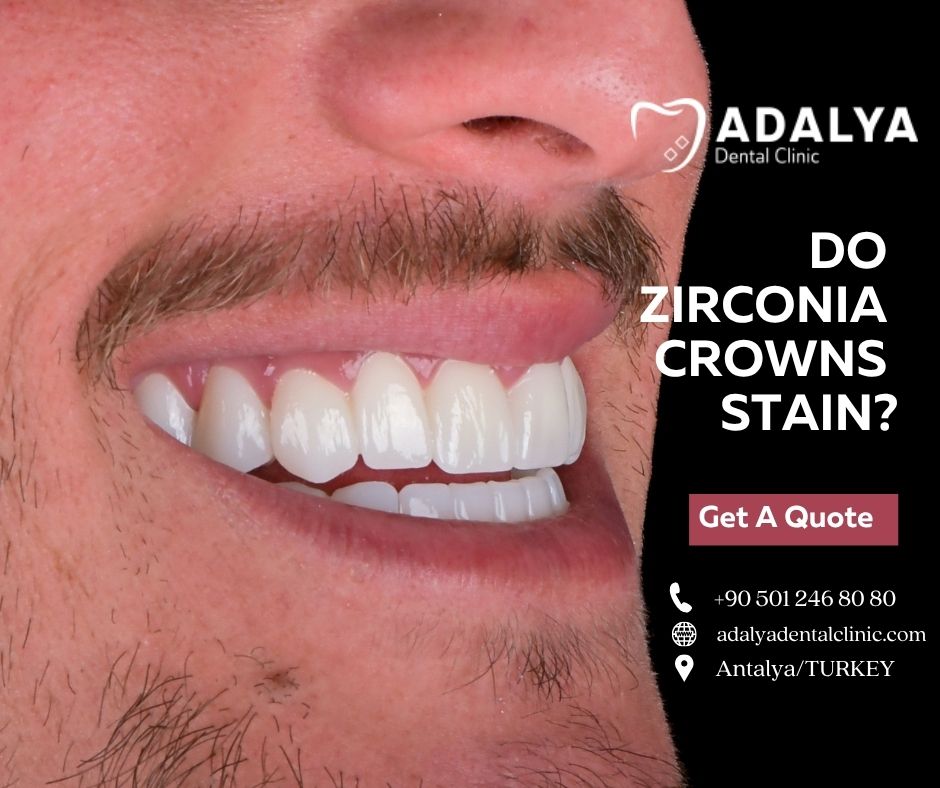
Zirconia crowns are stain resistant, not stain proof. A well-made, well-polished zirconia crown can stay bright for many years. But its appearance still depends on oral hygiene, lifestyle habits, professional maintenance, and the condition of the crown’s outer surface.
External factors such as the accumulation of plaque and tartar can lead to surface discoloration. These deposits can attract and hold onto stains from substances like coffee, tea, red wine, and smoking, affecting the appearance of your zirconia crown.
Understanding Zirconium Teeth
With its official name being zirconium dioxide, zirconia is a crystalline oxide of zirconium. Zirconia crowns are gaining popularity in dentistry due to its exceptional strength, aesthetic appeal and stain resistance.
While they are highly resistant to staining, proper care and maintenance are essential to ensure their longevity and appearance.
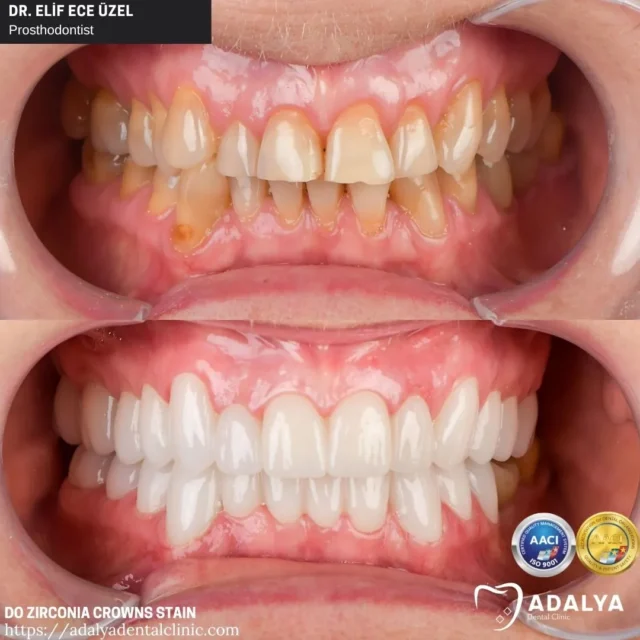
The biocompatibility of this material also means there is a lower likelihood of side effects; making zirconium crowns safe for many patients.
As Adalya Dental Clinic, we offer long-lasting, highly aesthetic, and affordable zirconium crowns in Turkiye for those seeking treatment abroad.
Do Zirconia Crowns Stain? Is It Possible?
Zirconia crowns are highly resistant to staining compared to other dental materials like composite resin or even natural teeth. Because the non-porous surface of zirconia makes it less likely to absorb pigments from foods and beverages, which are the primary culprits behind dental staining.
However, it is important to note that while zirconia crowns are resistant to staining, they are not entirely immune. External factors such as the accumulation of plaque and tartar can lead to surface discoloration.
Therefore, these deposits can attract and hold onto stains from substances like coffee, tea, red wine, and tobacco, affecting the appearance of your zirconia crown.
Zirconia crowns are stain resistant, not stain proof. A well-made, well-polished zirconia crown can stay bright for many years, but its appearance still depends on oral hygiene, lifestyle habits, professional maintenance, and the condition of the crown’s outer surface.
Do Zirconia Crowns Stain From Smoking?
Yes, zirconia crowns can stain from smoking. Because tar and nicotine leave deposits that cling to the crown, nearby teeth, and plaque. But usually as removable external staining rather than permanent discoloration inside the zirconia.
Smoking may also affect the appearance of the gums around a zirconium crown, which can make even a color-stable restoration look less attractive.
Does Zirconium Crown Stain From Coffee?
Coffee can stain the surface environment around a zirconia crown, especially when plaque is present or the surface is rough. Additionally, zirconia crowns with rough surfaces are somewhat more susceptible to staining after exposure to coffee.
Coffee pigments do not typically penetrate deeply into a high-quality monolithic zirconia crown. However, they can attach to the acquired pellicle, plaque, tartar, or tiny scratches on the crown’s finish.
Therefore, this can make the crown look slightly yellow, brown, or less glossy even though the underlying shade remains unchanged.
Do Zirconia Dental Crowns Stain From Vaping?
While vaping causes less of the intense tar staining seen in cigarettes on zirconia crowns, it can still affect oral health. This is because dry mouth, flavored aerosols, residue, and irregular hygiene can promote plaque buildup, and stained plaque can cause zirconia crowns to appear darker.
3D Smile Design Technology with Adalya Dental Clinic
Great Results in Zirconia Crowns & All Treatments in Turkey
Get In Touch With Adalya Dental Clinic!
Do Zirconia Crowns Stain Differently Depending On Monolithic or Layered Zirconia?
Not all “zirconia crowns” are created equal. Monolithic zirconia crowns are processed or made as a single piece of solid ceramic structure. Layered zirconia crowns, on the other hand, may have a zirconia base with porcelain or ceramic layering on the outside for greater transparency and aesthetics.
Therefore, this difference affects the level of staining and behavior of the zirconia crown over time.
If you are wondering, “do zirconia crowns stain easily,” the answer depends partly on the type of crown and how it was finished. A smooth monolithic zirconia crown is usually one of the more stain-resistant options.
A rough, damaged, poorly polished, or layered surface may show discoloration sooner because pigments can cling more easily.
The Effect of Material Differences on Zirconium Crowns Over Time
Monolithic zirconia is generally valued for strength and resistance to chipping because there is no separate porcelain layer that can fracture away.
But layered zirconia crown restorations can look very natural, but the outer layering material may have different wear, stain, or chipping behavior than solid zirconia.
Contact Us > Whatsapp
How To Remove Stains From Zirconium Crowns Safely?
While zirconia crowns are highly resistant, they are not entirely immune to staining. However, surface roughness, micro-cracks, and the quality of the glaze can influence the extent to which a zirconia crown might stain.
If you experience staining problems with your zirconium crowns, you can resolve this issue with the help of certain professional services.
Professional Stain Removal Procedures for Zirconium Crowns
- Examining the crown and surrounding teeth to identify whether the discoloration is on the crown, at the edge, or on adjacent enamel.
- Removing plaque and tartar around the crown margins, where staining often collects.
- Polishing with crown-safe materials that restore smoothness without damaging the surface.
- Checking the bite if grinding or heavy contact is dulling the crown.
- Recommending product changes if abrasive toothpaste or hard brushing is contributing to roughness.
Avoid trying to “sand” the stain away yourself. Because polishing strips, baking soda scrubs, charcoal toothpaste, hard-bristle brushes, and aggressive whitening pastes can make the surface rougher.
Although a rougher crown may temporarily look cleaner. But it can attract more stain later and lose the glossy finish that helps it blend with natural teeth.
looking for dental treatments abroad?
Affordable Turkey Teeth Package Deals With Us
Check Out Our Pages And Reach Our Expert Team
Daily Care That Keeps Zirconium Teeth Brighter
Zirconia crowns do need consistent care. The goal is to prevent stainable buildup and protect the polished surface. Small daily habits matter because most staining happens gradually, not all at once.
A Care Checklist for a Stain-Free and Brighter Appearance of Zirconia Crowns
- Brush twice daily with a soft-bristle toothbrush.
- Choose a low-abrasion, non-charcoal toothpaste unless your dentist recommends otherwise.
- Floss or use interdental cleaners around the crown every day.
- Rinse with water after coffee, tea, wine, or tobacco exposure.
- Do not brush aggressively immediately after acidic drinks.
- Schedule professional cleanings at the interval your dental team recommends.
- Ask about a night guard if you grind or clench your teeth.
- Have roughness, chips, open margins, or persistent discoloration checked promptly.
Pay special attention to the gumline. A crown can look stained when the actual issue is plaque or tartar collecting at the margin. Cleaning between teeth and around the crown edge helps protect both the appearance of the crown and the health of the supporting tooth and gums.
FAQ'S
You can find more informations about zirconium crowns by examining frequently asked questions.
The price range for zirconium crowns varies between $1,200-$2,000 in the US, £600-£1,000 in the UK, and €500-€1,200 in Germany. However, zirconium crowns prices in Turkey ranges from £125-£200 ($170-$270).
Zirconia crowns are generally regarded as safe dental crowns for the when used appropriately by a qualified dental professional.
In dentistry, “zirconia crown” usually refers to a crown made from zirconia, or zirconium dioxide, a ceramic material valued for strength, chemical stability, and tissue compatibility.
Zirconium crowns are fixed and long-lasting restorations. However, it would be a bold claim to say they are permanent lifetime. Nevertheless, with good care, oral hygiene, and overall health, some individuals do use them for a lifetime.
The key factors here are good oral hygiene, healthy gums, careful use, and good overall health.
There is no single winner for every mouth, but there are reliable patterns dentists use when recommending zirconia crowns. The most suitable material is usually chosen by matching the crown’s job to the patient’s bite and cosmetic goals.
However, monolithic zirconia is a better option for those with excessive teeth grinding problems and for posterior tooth restorations. But for those who want higher aesthetics and a more natural look, especially in front teeth, high-translucent, multilayer, or layered zirconia crowns are more suitable.
Zirconia crowns are often better than porcelain crowns when strength and chip resistance are the main goals. However, porcelain can be better when maximum translucency and enamel-like beauty are the priority.
Zirconia crowns are resistant to staining, but they are not completely immune to discoloration in the broader sense. The zirconia itself does not stain like natural enamel.
But surface glaze, cement edges, plaque buildup, scratches, smoking, coffee, tea, red wine, and poor polishing can affect how the zirconium crown looks over time.
One of the most significant advantages of zirconium crowns is their longevity and durability. Because zirconium dioxide, the material used to make these crowns, is incredibly strong and resistant to wear and fracture.