
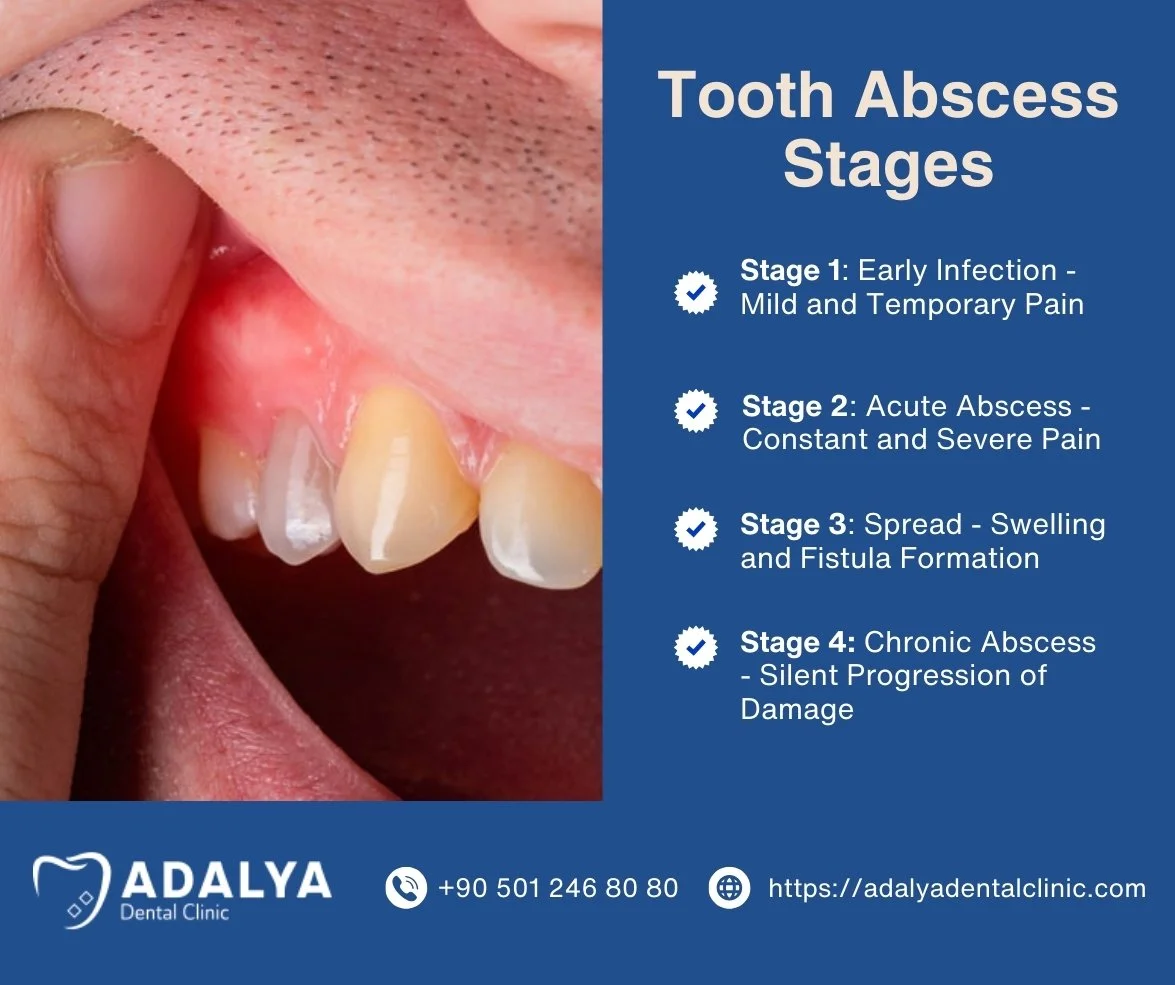
A tooth abscess is a serious dental issue. It involves a pocket of pus caused by a bacterial infection. The stages of tooth abscess begin with an early cavity or gingivitis. If untreated, the infection can progress rapidly. Symptoms like toothache, sensitivity, and swelling are common in the early stages.
Recognizing the stages of tooth abscess helps in seeking prompt dental care. This can prevent the abscess from reaching its final, more dangerous stage.
What is a Tooth Abscess?
A tooth abscess is a localized bacterial infection that develops in the tissues inside or around the tooth. This infection causes pus to accumulate as a result of the immune system’s response.
Pus consists of bacteria, dead tissue, and white blood cells, and the pain intensifies as the pressure increases.

Tooth abscesses generally occur in two main forms:
- Periapical abscess: Forms at the tip of the tooth root.
- Periodontal abscess: Develops in the tissues surrounding the gums and root.
In both cases tooth abscess stages the process is progressive and requires professional intervention.
What Causes A Tooth Abscess?
The main cause of a tooth abscess is a bacterial infection that has penetrated the tooth tissues. The most common causes are:
- Untreated tooth decay
- Gum disease and plaque buildup
- Dental trauma, cracks, and fractures
- Poor oral hygiene
- Previous unsuccessful dental treatments
These factors make it easier for bacteria to reach the tooth pulp or gum tissue.
Symptoms of Abscess Tooth
The symptoms of a tooth abscess are easily noticeable. The main symptoms are:
- Throbbing, severe toothache
- Swelling of the gums and face
- Fever and fatigue
- Bad breath and unpleasant taste
- Sensitivity when chewing
- Difficulty swallowing or breathing (advanced cases)
How Long Before an Abscessed Tooth Becomes Dangerous?
An abscessed tooth can progress rapidly. If the infection spreads beyond the tooth to the surrounding tissues and the jawbone—a process that can take anywhere from 3-5 days to 2-3 weeks—then the abscessed tooth can become dangerous.
Tooth Abscess Stages: From Early Cavity to Final Stage
Understanding the stages of a tooth abscess is crucial. Early detection can prevent severe complications. However, each stage requires different attention and management. Treatment varies depending on the abscess stage.
| Stages of Tooth Abcess | Symptoms |
|---|---|
| Stage 1 - Early Infection | Mild sensitivity, occasional pain |
| Stage 2 - Acute Abcess | Severe, constant pain, nerve involvement |
| Stage 3 - Spread & Swelling | Facial swelling, pus, bad taste |
| Stage 4 - Chronic Abscess | Bone damage, silent progression |
Stage 1: Early Infection – Mild and Temporary Pain
In the early stage of a tooth abscess, symptoms are usually mild and temporary. During this period, patients may experience sensitivity to hot or cold, occasionally feel a mild throbbing pain, and notice short-term discomfort without any apparent cause.
This stage, tooth abscess timeline represents the beginning of the process, and early intervention can significantly prevent the progression of the infection.
Key Features of Stage 1 of Tooth Abscess:
- Small cavities in tooth enamel
- Mild gum swelling or redness
- Occasional bad breath
- Potential sensitivity to hot or cold
Stage 2: Acute Abscess – Constant and Severe Pain
As the infection progresses, the pain becomes more intense, deep, and constant. It is common for the pain to increase at night or when lying down. In some cases, the pain may spread to the jaw, ear, or neck area.
At acute tooth abscess stage, the tooth nerve is often damaged, and pus begins to accumulate at the root tip. If treatment is delayed, the infection may become more aggressive.
Key Features of Stage 2 of Tooth Abscess:
- Intensified, persistent pain
- Sensitivity to pressure
- Swelling in the affected area
Stage 3: Spread – Swelling and Fistula Formation
At the spread stage of tooth abscess, the pressure inside the abscess increases, and the infection begins to spread to surrounding tissues. A pimple-like swelling (fistula) may form on the gum, and noticeable swelling may be seen in the face and jaw area.
A bad taste and odor may appear in the mouth, and some patients may experience a temporary reduction in pain. However, this relief is misleading and tooth abscess healing stages indicates a critical period before the process begins.
Key Features of Stage 3 of Tooth Abscess:
- Noticeable swelling and redness
- Severe, throbbing pain
- Swollen face or lymph nodes
- Difficulty opening the mouth or swallowing
Stage 4: Chronic Abscess – Silent Progression of Damage
In the chronic stage of tooth abscess, pain may decrease or disappear completely. However, the infection continues to progress silently in the bone tissue.
If left untreated, bone loss, spread of infection to wider areas, and systemic health risks may occur. Therefore, even if symptoms are mild, professional evaluation should not be neglected.
Key Features of Stage 4 of Tooth Abscess:
- Rupture with pus discharge
- Dramatic pain relief followed by systemic symptoms
- High risk of infection spreading
- Severe facial and jaw swelling
3D Smile Design Technology with Adalya Dental Clinic
Great Results in Dental Implants & All Treatments in Turkey
Get In Touch With Adalya Dental Clinic!
Wisdom Tooth Abscess Stages
The stages of a normal tooth abscess and a wisdom tooth abscess are generally the same. However, due to the location of wisdom teeth and the difficulty in cleaning them, the abscess stages can progress more rapidly.
Therefore, individuals with wisdom tooth abscesses should be more careful and act quickly.
Abscesses developing around wisdom teeth generally progress more rapidly. The main reasons for this include food accumulation, narrow areas that are difficult to clean, and bacterial accumulation around partially erupted teeth.
Notable Aspects in Wisdom Teeth Abscess
Wisdom tooth abscess stages during this process, severe pain, rapidly developing swelling, and the spread of infection can be seen in a shorter period of time. Therefore, early intervention is crucial in infections caused by wisdom teeth.
Both wisdom and big tooth abscesses present unique challenges. Because their location and size often complicate treatment. Therefore, it is crucial to maintain oral hygiene and regular dental visits.
Contact Us > Whatsapp
Tooth Abscess Healing Stages
Healing from a tooth abscess involves several important stages. First, the infection usually needs to be treated with antibiotics. This helps reduce inflammation and initiate the healing process.
Draining the abscess is often necessary to remove the inflammation. However, this can be done through root canal treatment or an incision. Proper drainage reduces pressure and speeds up healing.
Key Aspects of Tooth Abscess Healing Stages:
- Reduced swelling and pain
- Gradual return of normal oral function
- Regular follow-up visits with a dentist
Pain management is crucial during the healing process. Your dentist may prescribe over-the-counter medications. However, good oral hygiene aids healing and prevents future problems.
Therefore, a successful healing process leads to the restoration of dental health and overall health.
looking for dental treatments abroad?
Affordable Turkey Teeth Package Deals With Us
Check Out Our Pages And Reach Our Expert Team
How to Avoid Tooth Abscesses? And Treatment Options
The key to avoiding dental abscesses is preventative dental care. Because maintaining good oral hygiene minimizes the risk of infection.
Furthermore, daily habits significantly contribute to oral health. Regular brushing, flossing, and dental checkups are essential.
Basic Preventive Practices For Dental Abscess:
- Brush your teeth twice daily with fluoride toothpaste.
- Float daily to remove debris between your teeth.
- Go for regular dental cleanings and checkups.
- Limit sugary foods and drinks to reduce the risk of cavities.
By integrating these habits, the likelihood of a dental abscess is significantly reduced. However, if you have delayed treatment and the tooth abscess has progressed to an advanced stages, you will need professional treatment options.
Treatment Options For Tooth Abscesses
The primary goal of dental abscess treatment is to eliminate the source of infection, control pain, and prevent the infection from spreading to surrounding tissues.
However, the method used is determined based on the stage of tooth abscess, the salvageability of the tooth, and the extent of the infection.
Because early intervention allows for more conservative treatments, while delayed cases may require more invasive procedures.
Abscess Drainage
Abscess drainage reduces pressure and quickly relieves pain by draining accumulated pus. This procedure is an important first step in controlling the infection and usually provides rapid relief from symptoms.
Antibiotics and Supportive Treatments
Antibiotics and pain relievers are used as supportive treatment when the infection has spread or is accompanied by systemic symptoms. However, medication alone does not provide a permanent solution; it should be used in conjunction with mechanical infection control.
Root Canal Treatment
Root canal treatment aims to preserve the tooth in the mouth by cleaning the infected pulp tissue, disinfecting and filling the root canals. Therefore, in many cases, it offers a permanent and functional solution without the need for tooth extraction.
Tooth Extraction
Tooth extraction is preferred when the tooth is structurally beyond repair or when the infection has reached an advanced stage. This method aims to completely eliminate the source of infection and protect the surrounding tissues.
FAQ'S
You can find information for tooth abscess and its stages by examining frequently asked questions.
A tooth abscess typically develops in stages, beginning with mild sensitivity and progressing to severe pain, swelling, pus formation, and potential systemic infection if left untreated.
A tooth abscess can develop within days or over several weeks, depending on the severity of infection, immune response, and oral hygiene.
In some cases, a tooth abscess can develop rapidly within 24–72 hours, especially if caused by deep decay or trauma.
Healing time of tooth abscess varies by treatment type. After drainage or root canal treatment, symptoms often improve within a few days, but full healing may take 1–2 weeks or longer.
In early stages, a tooth abscess may appear as mild gum swelling, redness, or a small pimple-like bump near the tooth.
Without treatment, a tooth abscess may progress from mild pain to facial swelling, bone damage, and life-threatening infection such as sepsis.
Wisdom tooth abscesses often develop due to trapped food and bacteria under gum tissue, progressing quickly due to limited cleaning access.


