
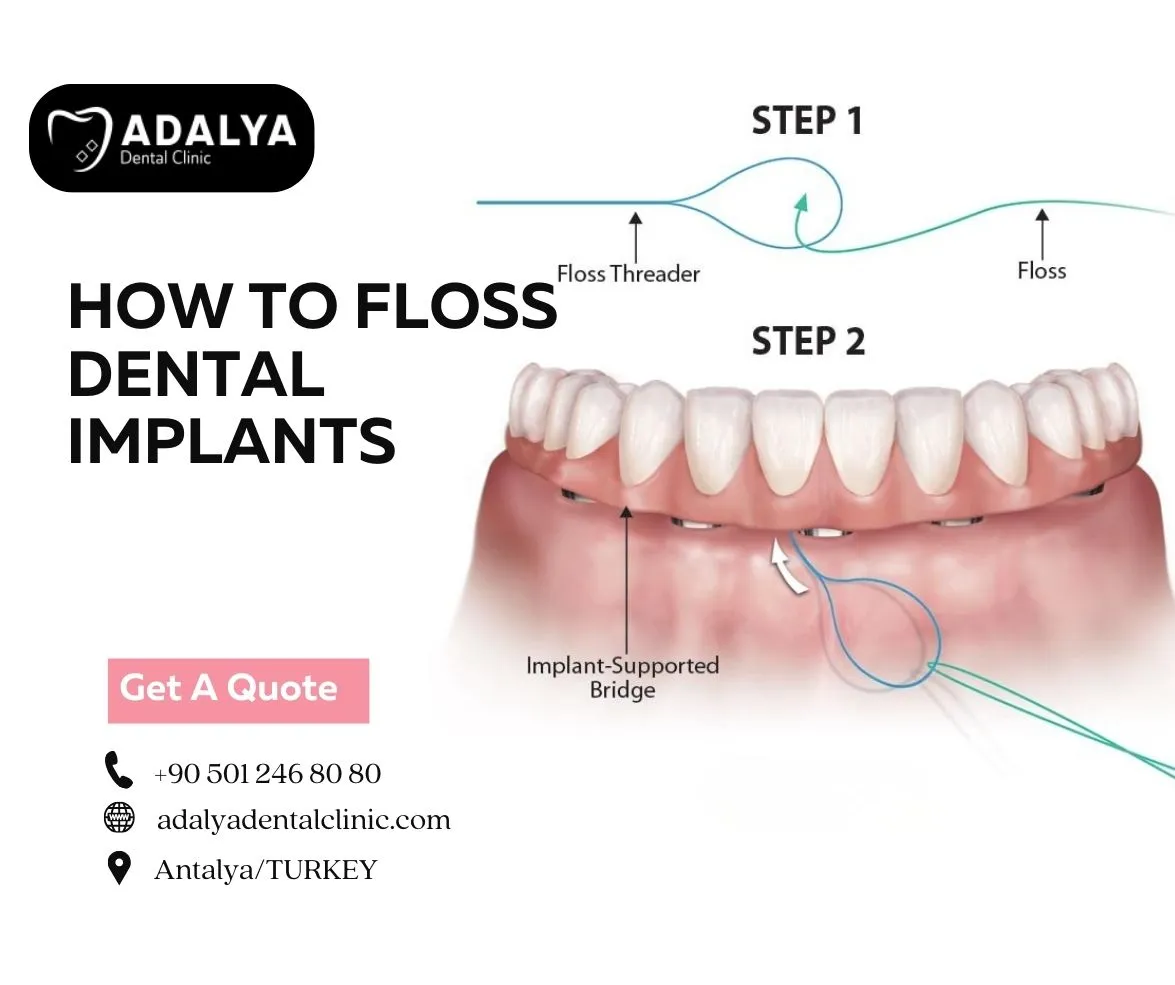
While using dental floss for implants, be sure to floss both sides of the implant and any adjacent teeth to remove plaque and food particles. However, use a gentle sawing motion to avoid damaging the gum tissue. If you encounter resistance, do not force the floss, as this can cause injury.
Properly cleaning and using dental floss for dental implants is a vital component of a comprehensive oral hygiene routine.
By understanding the importance of flossing, choosing the right tools, and following the correct technique, you can ensure the health and longevity of your implants.
Why Flossing is Important For Dental Implants?
Flossing plays a key role in maintaining dental implant health. Unlike natural teeth, implants cannot fight off plaque as effectively. This makes them vulnerable to infections.
Beacuse plaque and bacteria can accumulate around the implant site, leading to peri-implantitis, an inflammatory condition that can jeopardize the stability of the implant and potentially lead to its failure.
Therefore, regular dental floss using for dental implants is essential to remove food particles and plaque from areas that brushing alone cannot reach.

Key Reasons Why Dental Floss Using is Crucial For Implants
- Prevents plaque buildup and gum inflammation
- Reduces the risk of peri-implantitis
- Ensures long-term implant stability
- Helps maintain good oral hygiene
- Freshens breath by removing trapped bacteria
According to our clinical experience, our patients who take care of their dental implant and prosthesis health by using dental floss maintain the health of their dental implants and use their prosthetic teeth without problems for many years.
How to Floss Dental Implants?
Knowing how to floss dental implants may require a slightly different technique compared to natural teeth, allowing for thorough cleaning without causing damage. Here’s a step-by-step guide to help you effectively clean your implants:
How to Floss Around Dental Implants
1 – Prepare Your Floss:
Start by selecting the appropriate floss for your dental implants, such as a woven or braided floss, or a floss with a built-in threader. Cut a piece of floss approximately 18 inches long to ensure you have enough to work with.
2 – Thread the Floss:
If using a floss with a built-in threader, insert the stiff end between your implant and the adjacent tooth. If using regular floss, you may need to use a separate floss threader to guide the floss through the tight spaces.
3 – Floss Gently:
Once the floss is in place, wrap it around the base of the implant in a C-shape. Then, gently slide the floss up and down the side of the implant, making sure to reach below the gumline. Additionally, avoid snapping the floss, as this can damage the gum tissue.
4 – Clean All Sides:
Repeat the process for each side of the implant, ensuring that you clean both the front and back surfaces. However, take your time to ensure that you are thoroughly removing any plaque and debris.
5 – Rinse Your Mouth:
After flossing, rinse your mouth with water or an antimicrobial mouthwash to remove any dislodged particles and bacteria.
6 – Repeat Daily:
Make flossing a part of your daily oral hygiene routine to maintain the health of your gums and the longevity of your dental implants.
How to Use Dental Floss For Dental Implants? (All-on-4, All-on-6)
Flossing full dental implants like All-on-4 or All-on-6 requires precision. Given the structure, specialized techniques aid in effective cleaning.
Water flossers are highly recommended for full mouth dental implants hygiene. They reach areas that are challenging with traditional tools. Their effectiveness is well-noted among dental professionals.
Clinically, we recommend the use of water flossers for cleaning and care after full-mouth dental implant treatments. However, after individual implant treatments, we recommend the use of dental floss for cleaning.
3D Smile Design Technology with Adalya Dental Clinic
Great Results in Dental Implants & All Treatments in Turkey
Get In Touch With Adalya Dental Clinic!
Types of Floss For Implant Teeth
Selecting the right type of floss is crucial for dental implants. It’s vital to consider your specific dental needs. Because using the correct floss can prevent complications on dental implants.
Specialized floss options have been designed for implant care. Because they aim to clean the implants without causing damage. Therefore these tools help in maintaining dental implant and oral health effectively.
Types of Dental Floss Available For Implants:
- Traditional Floss: Best for basic needs, but not ideal for implants.
- Specialized Implant Floss: Designed specifically for implants and sensitive areas.
- Interdental Brushes: Useful for cleaning in between implants.
- Water Flossers: Ideal for reaching hard-to-clean areas.
- Floss Threaders: Assist in guiding floss under bridges and implants.
Clinically, we provide our patients with detailed information after dental implants in Turkey, including care recommendations tailored to their needs and the type of flossing they should use. Because different implant treatments require different care conditions.
Contact Us > Whatsapp
Choosing The Best Dental Floss For Implants
Not all flosses work well with implants. Because regular floss may not offer the needed thickness or texture.
However the best and specialized dental floss for teeth implants is often thicker and spongier. Because this design helps clean around the implant without causing damage. It can also remove debris more effectively.
When choosing the best dental floss for implants, consider these features:
- Spongy or thicker strands
- Antibacterial properties
- Gentle on gums
There are some very popular dental floss brands that include these features, and you can choose one of them.
Top Dental Implant Floss Brands
- Tepe (Bridge & Implant Floss )
- EKULF (Implant Dental Floss)
- Miradent Mirafloss Implant CHX Fine (Implant & Bridge Cleaning)
- Curaprox Dental Floss DF 845 (Implant & Braces Floss)
- Oral-B Threader Floss (Implant & Bridges & Braces Floss)
- Oral-B Glide Pro Health Threader Floss ((Implant & Bridges & Braces Floss)
- Proxysoft (Bridge & Implant Dental Floss)
- GUM Eez-Thru Floss Threaders (Implants & Bridges & Braces & Crowns)
Clinically, our dentists generally recommend using dental floss with a built-in threader or using a separate floss threader for your implants, bridges, or fixed dentures. Because it helps the floss to pass under and around the dentures without damaging the soft tissue.
looking for dental treatments abroad?
Affordable Turkey Teeth Package Deals With Us
Check Out Our Pages And Reach Our Expert Team
What If Your Dental Implant Smells When Flossing?
If your dental implant smells bad when you floss, it’s due to trapped bacteria. This is usually caused by poor hygiene and not thoroughly cleaning the implant area. If this continues, it can lead to more serious problems besides bad breath.
Consider these steps if the issue persists:
- Visit Your Dentist: Professional cleaning can help.
- Check for Gum Inflammation: Redness or swelling requires attention.
- Use Antibacterial Rinses: These help reduce bacteria around implants.
Ignoring the smell can lead to complications such as peri-implantitis. According to our clinical experience, patients who fail to thoroughly clean the area around the implant have a very high risk of bone and tissue loss around the implant.
3D Smile Design Technology with Adalya Dental Clinic
Great Results in Dental Implants & All Treatments in Turkey
Get In Touch With Adalya Dental Clinic!
Recommendations For Long-Term Implant Health
Caring for your dental implants, whether with dental floss or other tools, requires dedication and is essential. Regular oral hygiene is key to preventing future problems. Therefore, simple daily habits will extend the life of your implants and improve your quality of life.
Incorporate these practices into your routine for optimal implant health:
- Daily Flossing: Use the right tools for thorough cleaning.
- Proper Brushing: Twice a day with a soft-bristle brush.
- Routine Check-ups: See your dentist biannually.
- Healthy Diet: Limit sugar to reduce plaque.
However, there are some important points to consider when cleaning dental implants. These points are crucial for the long-term use of dental implants.
Common Mistakes to Avoid When Using Dental Floss For Implants
Flossing dental implants requires attention to detail. Common mistakes can hinder effectiveness. Being aware of these can improve your oral care routine.
- First, avoid applying excessive pressure to the gums when flossing for implants. This can irritate the gums or damage the implant. Always use gentle movements.
- Also, don’t rush. Thoroughness and time are needed to remove all plaque and debris. Allocating sufficient time for each implant ensures proper cleaning.
Here are some common mistakes to watch out for:
- Using the Wrong Floss: Select floss designed for implants.
- Neglecting Regular Flossing: Maintain a daily routine.
- Ignoring Bleeding Gums: Address any signs of gum issues promptly.
- Skipping Dental Visits: Regular check-ups with your dentist are crucial.
FAQ'S
You can find information for dental floss for implants by examining frequently asked questions.
It is recommended to floss dental implants at least once a day to remove plaque and food particles that can accumulate around the implant.
Regular flossing helps prevent gum inflammation, infection, and peri-implantitis, ensuring the long-term health and stability of your implants. Consistent flossing, combined with regular brushing and professional cleanings, is essential for maintaining optimal oral health.
Best dental flosses for dental implants typically feature built-in threaders, spongy segments, and regular floss to provide comprehensive cleaning.
Brands such as Tepe, Oral-B Super Floss, Glide Pro-Health Threader Floss, and ProxySoft Floss are highly recommended for their effectiveness and ease of use for dental implant cleaning.
Water flossers can help remove debris and reduce bacterial load around dental implants. However, they may not be as effective at removing plaque as traditional dental floss.
For best results, use both traditional dental floss and a water jet dental cleaning device to thoroughly clean around your dental implants.
Improper flossing can potentially damage your dental implants. Because using excessive force or the wrong type of floss can cause gum irritation, bleeding, and even harm the implant itself.
It is important to use gentle, proper flossing techniques and choose a floss specifically designed for dental implants to ensure effective cleaning without causing damage.
While regular dental floss can be used, specialized floss designed for implants, such as super floss or floss with a built-in threader, is often more effective in cleaning around the abutment and crown.
There are several alternatives to floss, including water flossers, interproximal brushes, and floss picks with built-in threaders. These tools can be effective in maintaining the cleanliness of your implants and may be easier to use for some individuals.
