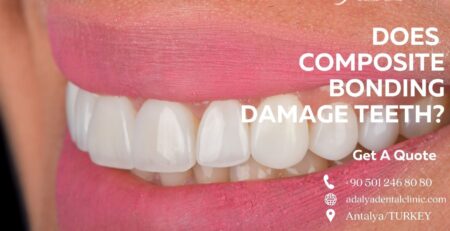

Composite bonding can stain over time, especially when it is exposed often to dark drinks, tobacco, certain foods, and inconsistent oral care. Discoloration usually appears between 1 and 3 years, and the individual’s usage, eating and drinking habits, and general oral hygiene directly affect this duration.
However, with a good quality composite resin material and expert medical care, it can maintain its appearance and color for a considerable period.
Understanding Composite Bonding
Composite bonding is a minimally invasive procedure, which means that it requires little to no removal of the existing tooth structure.
The process typically involves roughening the surface of the tooth, applying a bonding agent, and then molding the resin material to the desired shape.
Once the resin is in place, it is hardened using a special light, and the tooth is polished to achieve a natural-looking finish.
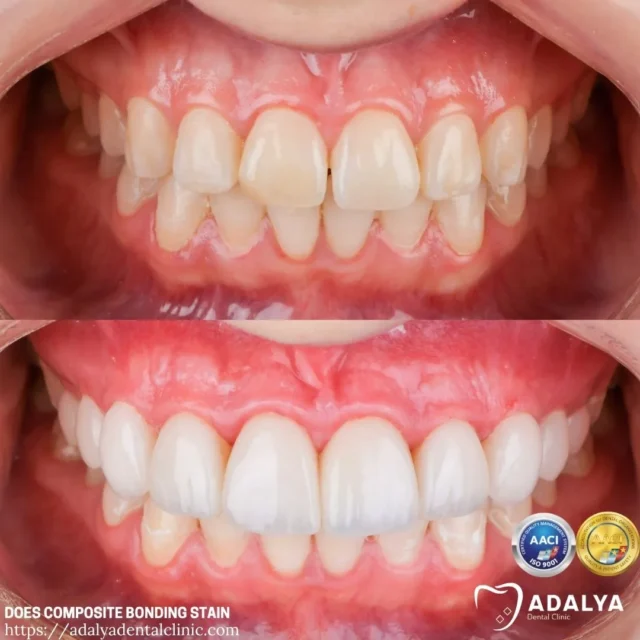
Despite its benefits, composite bonding is not without its drawbacks. One of the primary concerns is its susceptibility to staining. Over time, the resin material can absorb pigments from food, drinks, and other substances, leading to discoloration.
Does Composite Bonding Stain?
The phrase “does composite bonding stain” is common because patients often want to know whether their new smile will stay bright. The honest answer is that bonding can stay attractive for a long time, but it is not maintenance-free.
Yes, composite bonding can stain, but it does not stain in exactly the same way as natural enamel. Many people enjoy excellent cosmetic results from composite bonding, particularly when they understand that it is not completely immune to colour change.
Over time, the surface can become dull, rough, or slightly discoloured, especially if it is exposed to strong staining agents or if the polish wears down.
Why Bonding Material is Vulnerable To Stains?
Composite resin is made to blend with the surrounding teeth, but its surface is different from natural enamel. Enamel is very hard and naturally glossy, while composite bonding relies on a polished resin surface to reflect light and resist pigments.
When that surface becomes scratched or loses its shine, colour can settle more easily. Staining usually happens in two broad ways.
Surface stains sit on the outside of the bonding and may improve with professional cleaning or polishing. Deeper discoloration occurs when pigments work into the resin itself, which can be harder to remove and may require repair or replacement.
3D Smile Design Technology with Adalya Dental Clinic
Great Results in Dental Implants & All Treatments in Turkey
Get In Touch With Adalya Dental Clinic!
How Quickly Does Composite Bonding Stain?
The timeframe for composite bonding to stain can vary widely depending on several factors, including the quality of the resin material, oral hygiene habits, and dietary choices.
In general, composite bonding can start to show signs of staining within a year to 3 years after the procedure. However, with proper care and maintenance, it is possible to extend this timeframe significantly.
In our composite bonding treatments in Turkey, thanks to our highly expert physicians and the use of premium brand composite resin materials (Takuyama Asteria, Saremco, 3M Espe), our patients do not experience staining problems for at least 1-2 years.
The Effect of High-Quality Composite Resin Brand on Staining Time
Higher-quality resin materials like Tokuyama Asteria, 3M ESPE and Saremco are generally more resistant to staining. If your dentist uses premium composite resin brands like them, you may find that your bonding remains bright and clear for a longer period.
Conversely, lower-quality materials may begin to show discoloration much sooner.
The Effect of Oral Hygiene Composite Resin Brand on Staining Time
Oral hygiene habits also play a crucial role in how quickly composite bonding stains. Because regular brushing, flossing, and the use of mouthwash can help remove potential staining agents before they have a chance to adhere to the resin surface.
Additionally, minimizing the consumption of staining foods and beverages can help prolong the appearance of your composite bonding.
Contact Us > Whatsapp
Common Causes of Staining in Composite Bonding
One of the most common causes of staining in composite fillings is diet. Strong pigments in foods and drinks can adhere to the filling surface, especially if the resin has become somewhat rough. You don’t always need to completely avoid these products.
However, moderation and smart habits make a difference in the appearance and lifespan of composite bonded teeth.
Everyday Foods and Drinks That Affect bonding
- Coffee and espresso
- Black tea and some herbal teas
- Red wine
- Cola and dark fizzy drinks
- Soy sauce and balsamic vinegar
- Curry and turmeric-rich foods
- Tomato-based sauces
- Dark berries
- Beetroot
- Highly coloured sweets or sports drinks
Being mindful of these common staining agents can help you make informed choices to protect your composite bonding.
looking for dental treatments abroad?
Affordable Turkey Teeth Package Deals With Us
Check Out Our Pages And Reach Our Expert Team
What To Do When Bonding is Stained
If your bonding already looks stained, start with a professional opinion rather than trying harsh home remedies. Especially avoid abrasive whitening toothpastes, baking soda scrubs, or at-home scraping tools.
Because these may make the surface rougher, which can create a cycle where the bonding stains more easily.
Depending on the type of stain, the dentist may recommend several options:
- Professional cleaning to remove plaque and surface deposits.
- Polishing to smooth the resin and improve shine.
- Minor repair if edges are stained, chipped, or rough.
- Replacement if the bonding has deeply discoloured or no longer matches your smile.
- Reviewing your habits to reduce repeat staining after treatment.
Daily Habits For Keeping Bonding Brighter
With a realistic care routine, you can reduce the likelihood of composite filling stains forming. However, the goal isn’t to adopt a completely colorless diet. It’s simply to reduce the amount of pigment that accumulates on the teeth and protect the polished surface of the resin.
A useful bonding care checklist includes:
- Brush twice daily with a soft toothbrush. Gentle, thorough brushing removes plaque without unnecessarily scratching the resin.
- Clean between the teeth every day. Floss or interdental brushes help prevent edge staining where bonding meets natural tooth.
- Rinse with water after staining foods or drinks. This simple step reduces how long pigments remain on the surface.
- Limit long sipping sessions. Finishing coffee or tea in a shorter window is usually better than bathing the teeth in pigment all morning.
- Avoid using teeth as tools. Opening packets or biting hard objects can chip or roughen bonding.
- Wear a night guard if recommended. Grinding can wear the surface and make bonding more prone to stains.
- Keep professional cleaning appointments. Hygienists can remove build-up that home care may miss.
FAQ'S
You can find information for composite bonding stain and its causes by examining frequently asked questions.
Yes, vaping may stain bonding, especially when products contain nicotine, flavourings, or colouring agents. It is often perceived as less staining than smoking, but that does not mean it has no effect on cosmetic dental materials.
Additionally, vapour residue can contribute to a film on teeth, and nicotine can become yellowish when exposed to oxygen. If the bonding surface is rough or plaque is present, stains may be more noticeable.
Darker or sweeter vape liquids may also leave more residue, although the level of staining varies widely depending on use.
Yes, smoking can stain composite bonding. Because tobacco smoke contains staining compounds that can leave yellow or brown discolouration on teeth and dental materials, including composite resin.
In addition to that smoking may contribute to plaque build-up and surface dullness, which can make bonded teeth look older or less polished.
Yes, coffee can stain composite bonding. However, it’s important to note that while coffee can stain composite bonding, the degree of staining is generally less severe compared to natural teeth.
Coffee is notorious for its staining properties. The dark color of coffee is due to the presence of chromogens, which are pigmented molecules that easily adhere to surfaces, including teeth and dental restorations.
When you drink coffee, these chromogens can latch onto the microscopic pores and irregularities on the surface of your teeth, leading to discoloration over time.
Unlike natural teeth, composite bonding cannot be whitened with traditional teeth whitening treatments. If your composite bonding becomes stained, your dentist may recommend polishing the surface or replacing the bonding to restore its appearance.
Yes, dietary changes can significantly impact the staining of composite bonding. Because limiting the consumption of staining foods and beverages and rinsing your mouth with water after consuming them can help reduce the risk of discoloration.
If your composite bonding becomes stained, first consult your dentist. Because they can assess the extent of the staining and recommend appropriate treatment options, such as polishing or replacing the bonding.