
Many wonder if they can whiten composite bonding. The answer is no straightforward. Traditional whitening methods don’t work on composite bonding teeth. Because traditional teeth-whitening methods must act on the tooth enamel to be effective.
However, since the tooth enamel cannot be reached after composite bonding, teeth-whitening methods have no whitening effect on composite teeth restorations.
So understanding the limitations of composite bonding is crucial. It helps in making informed decisions about dental aesthetics. There are other alternative professional options available to improve the appearance of bonded teeth.
Understanding Composite Bonding
Composite bonding stands out due to its minimally invasive nature. Unlike other dental procedures, such as veneers or crowns, composite bonding typically requires little to no removal of the natural tooth structure.
So this makes it a preferred choice for many patients who are looking to improve their smile without undergoing extensive dental work.
Moreover, the procedure can usually be completed in a single visit to the dentist, making it a convenient option for those with busy schedules.
How It Works?
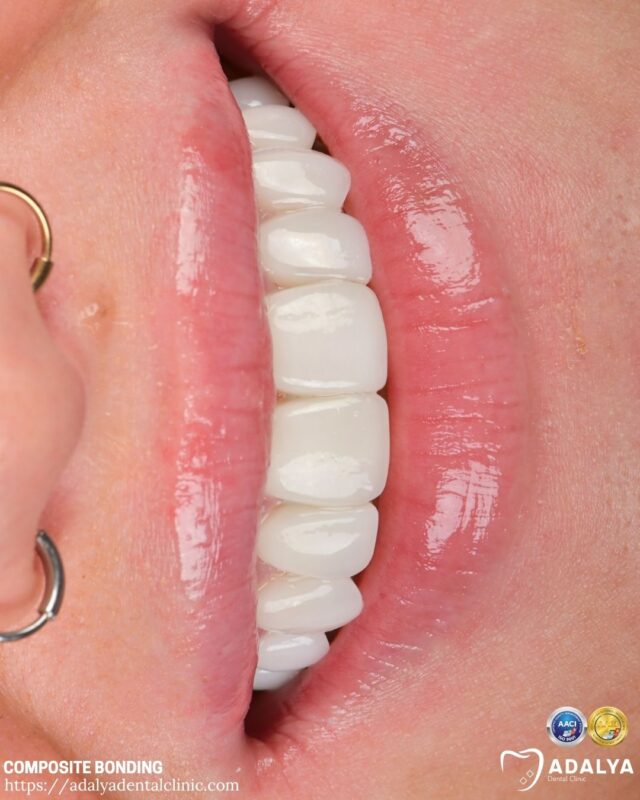
Composite bonding procedure involves applying a resin material, either the same color as your natural teeth or lighter, to correct issues such as fractures, cracks, discoloration, and gaps.
The resin is meticulously shaped and polished to seamlessly blend with your natural teeth, resulting in a more aesthetically pleasing smile, and, depending on the individual’s preference, a full set of whiter or more natural-looking teeth.
With our composite bonding treatments in Turkey, we achieve remarkable before-and-after teeth bonding results, ranging from premium porcelain-like finishes to natural-looking teeth.
Can You Whiten Composite Bonding Teeth?
Many wonder if they can whiten composite bonding like natural teeth. Unfortunately, traditional whitening methods are ineffective for composite bonding teeth. Because composite bonding is made from resin material that is not reactive to bleaching agents.
Traditional teeth whitening methods, such as over-the-counter whitening strips or gels, are designed to break down stains by penetrating the enamel layer of natural teeth.
However, they do not have the same effect on composite resins. Because the composite resin material covers the tooth enamel layer, preventing the whitening agents from working.
Can You Whiten Teeth After Composite Bonding Procedure?
You can have teeth whitening done before or after composite bonding treatment. However, teeth whitening before composite bonding can help your teeth appear whiter after dental bonding treatment.
But whitening after composite bonding is only possible for natural teeth and is applied to match the whiter color of the composite teeth.
Teeth whitening after composite bonding is more often preferred by people who have full set composite bonding on their upper teeth and are trying to even out the darkness on their lower teeth with their composite teeth.
3D Smile Design Technology with Adalya Dental Clinic
Great Results in Composite Bonding & All Treatments at Adalya
Get In Touch With Adalya Dental Clinic!
How Can You Whiten Composite Bonding Teeth?
If you are not satisfied with the color of your composite bonding teeth, there are minimal and radical alternatives you can consider.
These options may be preferred depending on the individual’s expectations regarding the results of their composite bonding treatments and their overall expectations from the treatment.
Radical Approaches to Whitening Composite Bonding Teeth
Patients generally opt for more radical approaches to whiten composite bonding after 5 years. This is because, on average, composite teeth darken after five years, and repairs may be necessary.
These treatments;
- Reapply Bonding: Replacing old composite teeth with whiter ones is a faster and more affordable alternative.
- Dental Veneers: A more durable option that can offer a whiter shade and minimal shaving.
- Dental Crowns: More suitable option for severe discoloration and damage on the teeth.
Minimal Approaches to Whitening Composite Bonding Teeth
There are also minimal approaches for composite bonding teeth to maintain their appearance and color as if they were brand new. These techniques can help preserve the freshness and integrity of your composite teeth.
These are;
- Professional Cleaning: Proper cleaning is essential to keep your composite bonding looking its best and to extend its lifespan.
- Polishing: This can remove surface stains and restore the bonding’s luster, making it look brighter.
- Daily Maintenence: Brush twice daily with a non-abrasive toothpaste and floss regularly to prevent plaque buildup.
- Proper Diet: Certain foods and drinks, like coffee, tea, and red wine, can stain composite bonding and try to avoid.
Contact Us > Whatsapp
Why Traditional Whitening Methods Don’t Work on Composite Bonding?
Composite bonding is made of resin, a non-porous and durable material. Unlike tooth enamel, resin doesn’t respond to bleaching.
Teeth whiteners like strips and gels work by penetrating enamel to eliminate stains. Enamel’s porous nature allows this process. However, composite resin lacks this porosity. Thus, bleaching agents simply cannot alter its shade.
Why Do The Whitening Methods Fail?
- Enamel Reactivity: Natural teeth change color because bleach opens pores in enamel.
- Non-Porosity: Composite bonding remains untouched by bleaching due to its non-porous surface.
- Color Set: The original shade is set during application, and can’t be adjusted post-procedure.
This means your bonded teeth will retain their initial color despite any home whitening effort. Even professional whitening gels used during in-office procedures won’t impact the composite.
looking for dental treatments abroad?
Affordable Turkey Teeth Package Deals With Us
Check Out Our Pages And Reach Our Expert Team
How to Maintain The Color of Composite Bonding?
Proper maintenance is essential to keep your composite bonding looking its best and to extend its lifespan. By following a few simple tips, you can help to prevent discoloration, chipping, and other issues that can affect the appearance of your bonded teeth.
Maintenance Tips for Composite Bonding
- Brush Twice Daily: Use a non-abrasive toothpaste.
- Floss Regularly: Prevent plaque buildup.
- Regular Check-ups: Visit your dentist every 6 months for professional cleaning and polishing.
- Avoid Hard Foods: Protect bonding from chipping.
- Use a Soft Brush: Minimize abrasion on bonding.
These practices ensure your smile continues to shine brightly, without the need for invasive dental work. If you notice any quick changes, address them with your dentist promptly.
FAQ'S
You can find informations about if you can whiten composite bonding teeth by examining frequently asked questions.
No, composite bonding does not respond to traditional whitening treatments like natural teeth. Alternative methods such as professional cleaning, polishing, replacing the composite material, veneers and crowns are required to achieve a whitening effect.
Unfortunately, over-the-counter whitening products, including strips and gels, don’t work on composite bonding. They only whiten natural teeth.
Attempting to whiten the natural and composite teeth together can lead to uneven results. When natural teeth become whiter, composite parts do not. This contrast may leave the bonded teeth looking darker than desired.
The unchanged color of the composite creates a mismatch. This is more noticeable when the natural teeth appear noticeably lighter. This is why merely applying whitening products without a plan can backfire.
Whitening strips won’t change the color of composite bonding. Using strips might lighten your natural teeth, but bonded areas remain unchanged.
Maintaining good oral hygiene, avoiding foods and beverages that cause staining, and making healthy lifestyle choices can help prevent discoloration. Additionally, regular dental check-ups and professional cleanings are also essential.