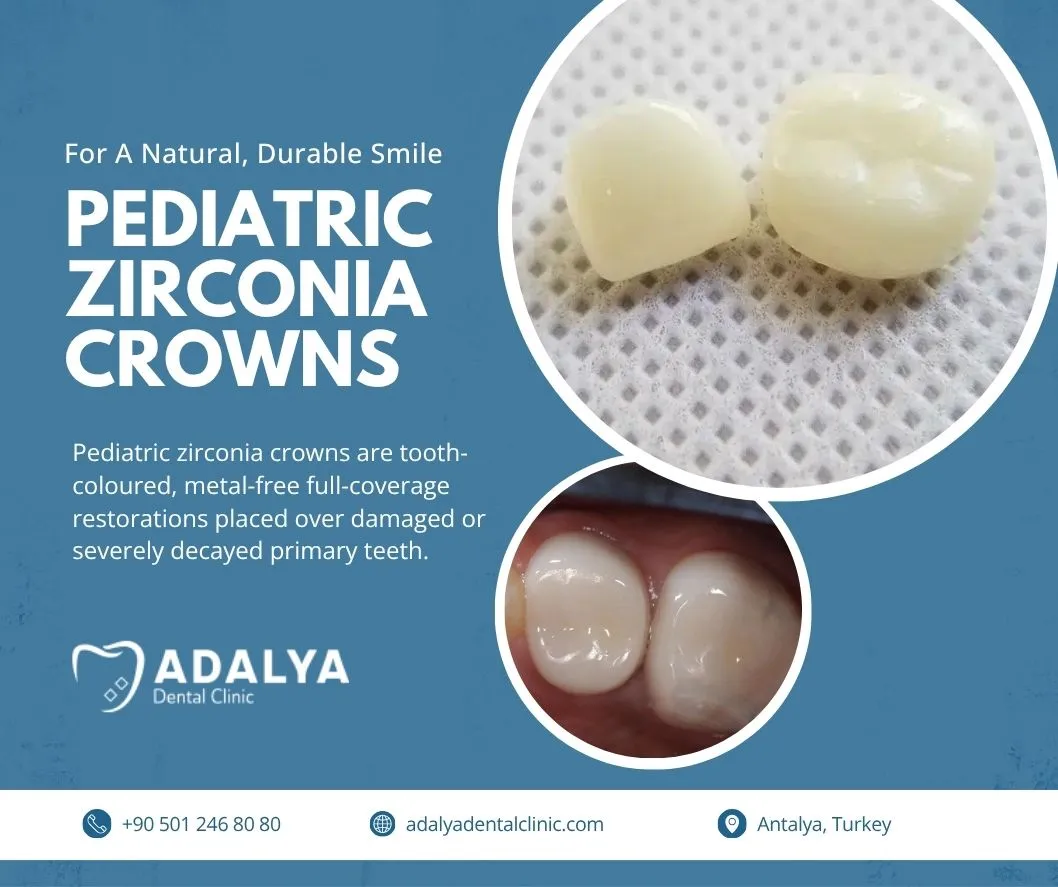
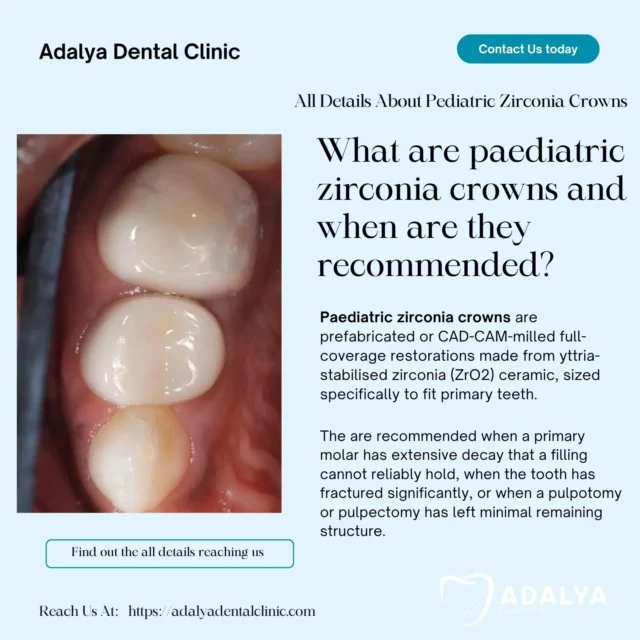
Pediatric zirconia crowns are prefabricated, tooth-colored caps made from zirconium oxide ceramic that cover a damaged or heavily decayed primary tooth. They look like a natural tooth, they’re completely metal-free, and they’re designed to stay in place until that baby tooth falls out on its own.
This article covers what the clinical evidence says about each benefit, how zirconia compares with stainless steel and composite alternatives, and what longevity figures parents can realistically expect.
What Are Pediatric Zirconia Crowns?
Pediatric zirconia crowns are tooth-shaped restorations designed to cover and protect damaged or heavily decayed teeth in children.
They are commonly made from zirconium dioxide, a strong ceramic material used in dentistry for its durability and tooth-like appearance.
Unlike a small filling, a pediatric zirconia crown surrounds much of the remaining tooth, which can provide broader protection when damage is extensive.
How Long Can A Pediatric Zirconia Crown To Last?
According to pooled data published in the International Journal of Medical Research, the estimated 5-year retention rate for a prefabricated pediatric zirconia crown is approximately 97.1%, compared to about 97.9% for stainless steel and around 83.5% for resin strip crowns.
That’s genuinely reassuring, and for front baby teeth in particular, zirconia tends to perform very well.
When Does Your Child Actually Need A Zirconium Crown?
The clinical conditions requiring the use of padiatric zirconia crowns are specific and well-defined.
The main indications include extensive multi-surface caries, primary teeth that have previously undergone pulpotomy or pulpectomy (root canal treatment), developmental enamel defects such as hypomineralisation or hypoplasia, traumatic crown fractures, and anterior teeth exhibiting significant discolouration or structural damage.
Therefore, the aim is not merely cosmetic improvement, but complete coronal protection.
A Natural-Looking Alternative To Silver-Colored Crowns
Unlike stainless steel crowns, pediatric zirconia crowns do not have a silver-colored exterior. So, that makes them an option worth discussing when a damaged tooth is visible during smiling or speaking.
Additionally, while appearance may not be very important for children in most cases, it can be significant for parents.
3D Smile Design Technology with Adalya Dental Clinic
Great Results in Zirconia Crowns & All Treatments in Turkey
Get In Touch With Adalya Dental Clinic!
Benefits of Using Zirconia Crowns For Children
The five main advantages of pediatric zirconia crowns are: natural-looking aesthetics, metal-free biocompatibility, high strength and fracture resistance, reduced plaque buildup at the gumline, and long-term color stability.
These advantages are why more pediatric dentists are recommending zirconia crowns as the first-choice restoration for child patients, especially when appearance or metal sensitivity is a priority.
1) Tooth-Coloured Aesthetics That Look Natural
Zirconia crowns matches the natural shade of a child’s primary teeth, removing the visible metallic glint of stainless steel. Additionally, clinical studies and parental satisfaction surveys consistently report higher aesthetic approval ratings for zirconia crowns over metal alternatives.
2) Metal-Free Biocompatibility and Reduced Allergy Risk
Zirconia is chemically inert and produces no clinically significant metal-ion release, making it well tolerated by gingival tissue and appropriate for children with known or suspected nickel sensitivity.
However, stainless steel crowns contain nickel and chromium, which can produce ion release over time.
3) High Strength and Fracture Resistance
Monolithic zirconia provides durable full-coverage protection and performs well under the significant occlusal forces generated by a primary molar during chewing.
Because there is no separate veneering layer, the structural failure modes that affect porcelain-fused-to-metal or resin-veneered crowns are eliminated entirely.
4) Smoother Surface and Healthier Gums
Zirconium’s polished, non-porous surface reduces bacterial adhesion and plaque buildup compared to rougher materials.
Additionally, some studies comparing zirconium with anterior strip crowns have found significantly less plaque and gingival bleeding with zirconium at three and six months of follow-up.
5) Long-Term Colour Stability
Unlike resin-veneered metal crowns or composite restorations, monolithic zirconia resists staining from food and drinks throughout the lifespan of the primary tooth.
Because primary posterior molars are typically retained until age 10 to 12, so a stable-looking restoration matters for several years, not just a few months. Colour stability also connects directly to child confidence and parental satisfaction.
For most posterior teeth applications, monolithic zirconia is a clinically safer option due to its greater durability and resistance to forces.
The Importance of Protecting Baby Teeth During Childhood
Baby teeth help children chew and speak, and they hold space for the permanent teeth that will develop underneath. Therefore, their temporary role does not make them insignificant. On the contrary, this temporary, healthy space-holding has positive effects that can impact a child’s entire life.
How Does Zirconia Compare To Other Options in Pediatric Dental Crowns?
When aesthetics, biocompatibility, or parental preference are determining factors, zirconia is solidifying its place in pediatric crown treatments.
None of the three materials is universally better than the others. Because the right choice depends on the specific tooth, the child’s behavior, and the clinical situation in question.
Dental Crowns Comparison in Pediatric Crown Treatments
| Feature | Zirconia | Stainless Steel | Resin Strip Crowns |
|---|---|---|---|
| Appearance | White, tooth-colored, highly aesthetic | Silver metal | Tooth-colored |
| Strength and Longevity | High; comparable to stainless steel in most studies | Very high; well-proven, especially for molars | Moderate; more prone to wear and loss of retention |
| Tooth Reduction Required | Relatively substantial and precise | Less reduction; can be adjusted chairside | Limited reduction; depends on bonding conditions |
| Chairside Adjustability | Rigid; cannot be crimped or reshaped | Can be trimmed, crimped, and adapted | Formed directly over the prepared tooth |
| Gum Response | Generally less plaque, good gingival tolerance | Durable but can cause more plaque retention | Generally acceptable; surface wear can affect hygiene |
| Typical Cost | Highest | Lowest | Lower than zirconia |
| Best Use Case | Aesthetic priority, metal-free requirement, adequate tooth structure | Heavily decayed molars, especially after pulp therapy | Damaged front teeth with favorable bonding conditions |
Stainless steel crowns remain the most commonly used pediatric crown worldwide due to their lower cost, faster fit, and lower technical precision compared to zirconium.
Composite or strip crowns are mostly used in primary front teeth.
While zirconium isn’t automatically superior in every case, it offers advantages over other options in many areas.
Therefore, understanding the advantages and disadvantages allows parents and dentists to make the right choice for a particular tooth and child.
looking for dental treatments abroad?
Affordable Turkey Teeth Package Deals With Us
Check Out Our Pages And Reach Our Expert Team
Understanding The Cost of Pediatric Zirconium Crowns
The cost of pediatric zirconia crowns can vary depending on whether the restoration is applied to an anterior or posterior primary tooth.
Average Pediatric Zirconia Crown Prices by Country
| Country | Indicative Price Per Crown |
|---|---|
| United States | $350–$600 |
| United Kingdom | £400–£550 |
| Germany | €250–€350 |
| Turkey | $150–$250 |
At Adalya Dental Clinic, we hold AACI accreditation and utilize CAD-CAM technology and 3Shape intraoral scanners for precision restorations.
We also have a permanent UK consultation office in Maidstone, Kent, so families can discuss treatment plans locally before traveling to Turkey for zirconia crown treatments for themselves and their children.
Contact Us > Whatsapp
Choosing A Local or International Provider Thoughtfully
Searching “pediatric zirconia crowns near me” can help you create a shortlist. But use the consultation to evaluate the proposed care. Ask whether the practice offers zirconia crowns for your child’s tooth and how the dentist decides between materials.
Families needing multiple dental veneers, facing high deductibles, or lacking children’s dental health insurance are increasingly exploring accredited clinics abroad.
However, wherever you look, the key factors to verify are the same for pediatric zirconia crowns:
Confirmed international accreditation, digital scanning technology for precise fit, transparent package pricing, and a clear local aftercare opportunity near you.
Daily Care Of A Pediatric Zirconium Crown
For children who have received pediatric zirconia crown treatment, use a soft, child-sized toothbrush and fluoride toothpaste, helping your child reach every surface.
Use a rice-grain-sized amount for children under three years old, and a pea-sized amount for children aged three to six.
Specifically clean between teeth that touch each other and ask your dentist to show you how to clean the crown area. Additionally, review sugary foods and drinks as part of the preventative conversation.
In short, daily cleaning, plain water, and attention to diet are important parts of protecting baby teeth.
Key Takeaways
- Tooth-coloured and durable: Zirconia crowns match natural tooth shade and resist staining throughout a primary tooth’s lifespan.
- Metal-free material: Zirconia produces no clinically significant metal-ion release, making it appropriate for children with known or suspected nickel sensitivity.
- Strong clinical record: Studies report approximately 95 to 100% intact-crown survival at 12 to 18 months for primary molar zirconia crowns, though outcomes depend on precise preparation and cementation.
- Not always superior to stainless steel: Stainless steel crowns remain more retentive, cheaper, and less technique-sensitive in many routine cases.
- Aftercare matters: Avoiding sticky foods and brushing twice daily protects both the cement seal and the surrounding gum tissue.
- Ask the right questions: Accreditation, crown system, cementation protocol, and follow-up arrangements are the key factors to confirm before booking.
FAQ'S
You can find more informations about pediatric zirconium crowns by examining frequently asked questions.
Yes, a dentist may recommend zirconia crowns for kids when decay is widespread and fillings don’t leave enough solid tooth structure. Crowns may also be considered for a tooth that is broken or weakened after some dental treatments.
In most cases, a crown helps the child continue to chew comfortably by restoring the shape and function of the tooth.
Yes, zirconia crowns are a safe option for children with known or suspected nickel sensitivity. Because zirconia is metal-free and produces no clinically significant metal-ion release.
So, this chemical inertness makes zirconia well tolerated by gingival tissue and removes the question of nickel exposure that exists with stainless steel crowns.
Often yes; a well-placed zirconia crown on a primary molar can last the remaining life of that tooth without replacement.
Clinical data report approximately 95 to 100% intact-crown survival through 12 to 18 months and cohorts showing many crowns remaining successful at 24 to 38 months. Additionally, posterior primary molars are typically retained until age 10 to 12.
More tooth reduction is required for zirconia. Because the crown is selected first and the tooth is prepared to fit it passively, with standard occlusal reduction of about 1.5 to 2 mm and a feather-edge margin extending 1 to 1.5 mm subgingivally.
Unlike stainless steel, zirconia cannot be crimped intraorally to improve retention. So undercuts must be eliminated and proximal contacts cleared to allow passive seating.
Chidren should brush twice daily with fluoride toothpaste around the crown margin, floss between the crown and adjacent teeth, and avoid very sticky sweets such as caramel, gummies and chewing gum.
Because these measures protect the cement seal and surrounding gum tissue. Additionally, scheduled dental appointments allow the dentist to confirm margins remain intact.
Medically reviewed by Dr. Elif Ece Üzel
Prosthodontist & Owner of Adalya Dental Clinic