
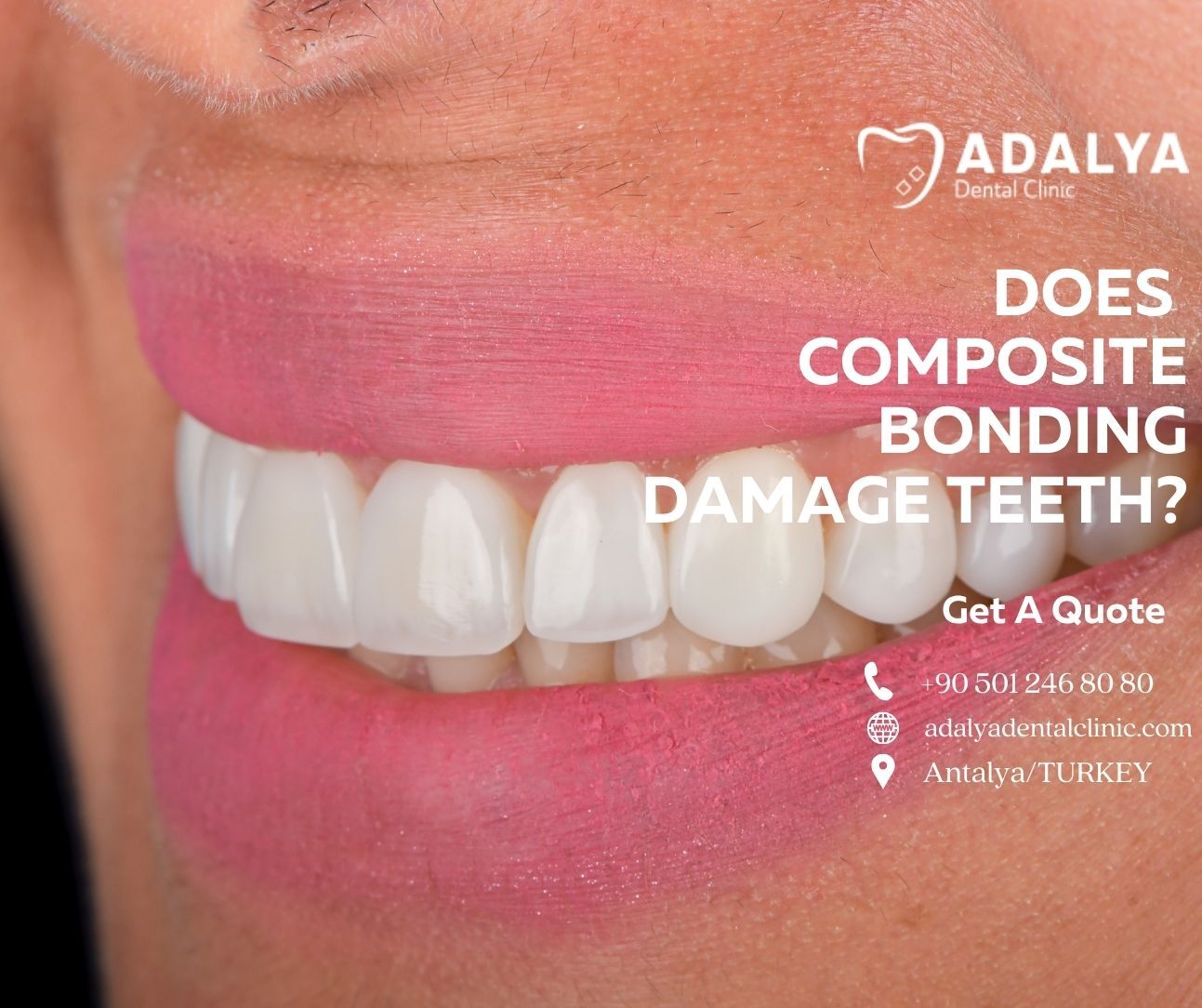
When done correctly, composite bonding does not damage natural teeth. Because composite bonding is generally a minimally invasive procedure that does not require aggressive tooth preparation.
Therefore, the natural teeth under the composite bonding are not damaged in the long term, and the composite bonding can be removed and the natural teeth used whenever desired.
Composite bonding procedure is a safe treatment that provides very rapid change before and after teeth bonding treatment, and does not harm natural teeth.
What is Dental Bonding?
Composite bonding, also known as dental bonding, are a cosmetic dental procedure in which a tooth-colored, resin-based material is applied to teeth using minimally invasive methods to improve their appearance.
This versatile treatment can address a variety of dental issues, including chipped or cracked teeth, discolored teeth, gaps between teeth, and even minor misalignments.

How Composite Bonding Works?
The composite bonding process begins with a cosmetic dentist preparing the tooth surface. This involves slightly abrading the tooth and applying a conditioning liquid to help the filling material adhere better.
After preparing the tooth or teeth, the cosmetic dentist applies, molds, and shapes the composite resin onto the tooth surfaces. The resin is then cured using a special light, and final touches are made to ensure a perfect fit and appearance.
Does Composite Bonding Damage Your Teeth ?
Generally, composite bonding does not damage teeth during or after the procedure. The procedure is minimally invasive and preserves tooth structure.
However, the skill of the dentist is crucial. Proper technique ensures no unnecessary wear or damage. Therefore, choosing a qualified and experienced dentist reduces risks.
Does Composite Bonding Damage Natural Teeth
Concerns about composite bonding often focus on potential harm to teeth underneath. It’s essential to understand the nature of the procedure. When performed correctly, composite bonding does not damage natural teeth underneath.
The bonding resin material adheres to the tooth surface without the need for aggressive grinding. No damage occurs to the tooth structure or enamel. Therefore, composite bonding does not cause permanent damage to natural teeth underneath.
Does Composite Bonding Damage Teeth Long Term
Composite bonding does not damage natural teeth in the long term. However, problems can arise due to improper application or care. Regular check-ups and good oral hygiene reduce or eliminate the likelihood of these long-term risks.
Therefore, for a problem-free long-term composite treatment, good oral care, regular professional dental cleanings, and check-ups are crucial, just like with natural teeth.
3D Smile Design Technology with Adalya Dental Clinic
Great Results in Composite Bonding & All Treatments in Turkey
Get In Touch With Adalya Dental Clinic!
Does Removing Composite Bonding Damage Teeth ?
Removing composite bonding is a relatively simple process. This process does not involve altering the natural structure of the underlying tooth. Therefore, the tooth is not damaged during the composite bonding removal process, and the integrity of the enamel layer is preserved.
Cosmetic dentists use specialized tools to carefully remove the bonding material. This process is done meticulously to ensure the tooth surface is not damaged.
However, the cosmetic dentist’s skill is crucial at this stage. Otherwise, an inexperienced dentist could damage the tooth during composite bonding removal.
Key points regarding the removal of composite bonding
There is a myth that removing dental bonding can harm teeth. However, with proper techniques, this does not occur. The underlying tooth retains its original health and strength after the composite has been taken off.
- The procedure is gentle on the enamel and tooth.
- Skilled dental techniques ensure no damage to natural teeth.
- Common misconceptions about damage are often unfounded.
- Consulting an experienced dentist ensures a safe removal process.
Contact Us > Whatsapp
Potential Risks and Concerns
While composite bonding is generally considered safe, there are some potential risks and concerns that patients should be aware of.
Chippings or Breaks
One potential issue is that the bonding material may chip or break, especially if you bite down on hard objects or engage in habits like nail-biting or chewing on ice.
However, these risks can be minimized by taking proper care of your bonded teeth and avoiding behaviors that could cause damage.
Discoloration Over Time
Another concern is that composite bonding may become discolored over time. The resin used in the procedure is more porous than natural enamel, which means it can absorb stains from foods, drinks, and tobacco products.
To keep your bonded teeth looking their best, it is important to practice good oral hygiene, avoid staining substances, and visit your dentist regularly for cleanings and check-ups.
Sensitivity
In some cases, patients may experience sensitivity in the bonded teeth, especially if the bonding material is applied near the gum line or if the tooth was already sensitive before the procedure.
However, this sensitivity is usually temporary and can be managed with desensitizing toothpaste or other treatments recommended by your dentist.
In our composite bonding treatments in Turkey, we work with the one of top 3 composite bonding dentists in Turkey, and so far we have not received any complaints of sensitivity from our patients.
looking for dental treatments abroad?
Affordable Turkey Teeth Package Deals With Us
Check Out Our Pages And Reach Our Expert Team
How to Care For Bonded Teeth?
Proper care and maintenance of the teeth following the composite bonding procedure are essential to ensure optimal oral health and prevent potential complications.
However, your dentist will share all the details about post-treatment care with you after the dental bonding procedure.
Aftercare of Composite Bonding
1 – Good Oral Hygiene
One of the most important aspects of aftercare is maintaining good oral hygiene. This includes brushing your teeth at least twice a day with a fluoride toothpaste, flossing daily, and using an antiseptic mouthwash to reduce plaque and bacteria.
2 – Avoid Staining Foods and Drinks
To prevent staining and discoloration of the bonded teeth, it is important to be mindful of your diet and lifestyle habits. Avoid consuming foods and drinks that are known to cause stains, such as coffee, tea, red wine, and tobacco products.
If you do consume these items, rinse your mouth with water or brush your teeth shortly afterward to minimize the risk of staining. Additionally, using a straw for beverages can help reduce contact with the bonded teeth.
3 – Avoid Habits That Could Damage The Composite Bonding Teeth
It is also important to avoid habits that could damage the bonding material, such as biting your nails, chewing on ice, or using your teeth to open packages.
If you participate in sports or activities that pose a risk of dental injury, consider wearing a mouthguard to protect your teeth.
4 – Regular Dental Check-Ups
Regular dental checkups and cleanings are also essential to keep your fillings in good condition and maintain their color. Therefore, visit your dentist regularly, every 6 months.
FAQ'S
You can find information composite bonding and if it damages to natural teeth by examining frequently asked questions.
The composite bonding process involves minor etching, which is safe. This etching helps resin adhere effectively, without significant enamel loss. As a result, natural teeth remain largely intact and protected underneath after teeth bonding.
With proper care and maintenance, composite bonding lasts anywhere from 5 to 10 years. However, the longevity of the bonding depends on factors such as oral hygiene, lifestyle habits, and cosmetic dentist’s experience.
Can Composite Bonding Be Removed Without Damaging The Natural Tooth?
Yes, composite bonding are a reversible procedure. Because they involve minimal changes to the natural tooth structure, it’s possible to remove the composite material and return the tooth to its original state if necessary.
Yes, composite bonding teeth are more prone to staining than porcelain veneers, crowns, and natural enamel, and can discolor quickly if not properly cared for.
To minimize the risk of discoloration, it is important to practice good oral hygiene, avoid substances that cause staining, and visit your dentist regularly for cleanings and checkups.
Composite bonding procedure is painless, minimally invasive, and usually do not require anesthesia. The procedure involves only minor preparation of the tooth surface, and most patients experience little to no discomfort during the process.
Therefore, this makes it an attractive option for those who may be apprehensive about more invasive dental treatments.
