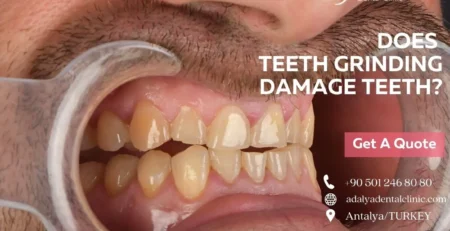
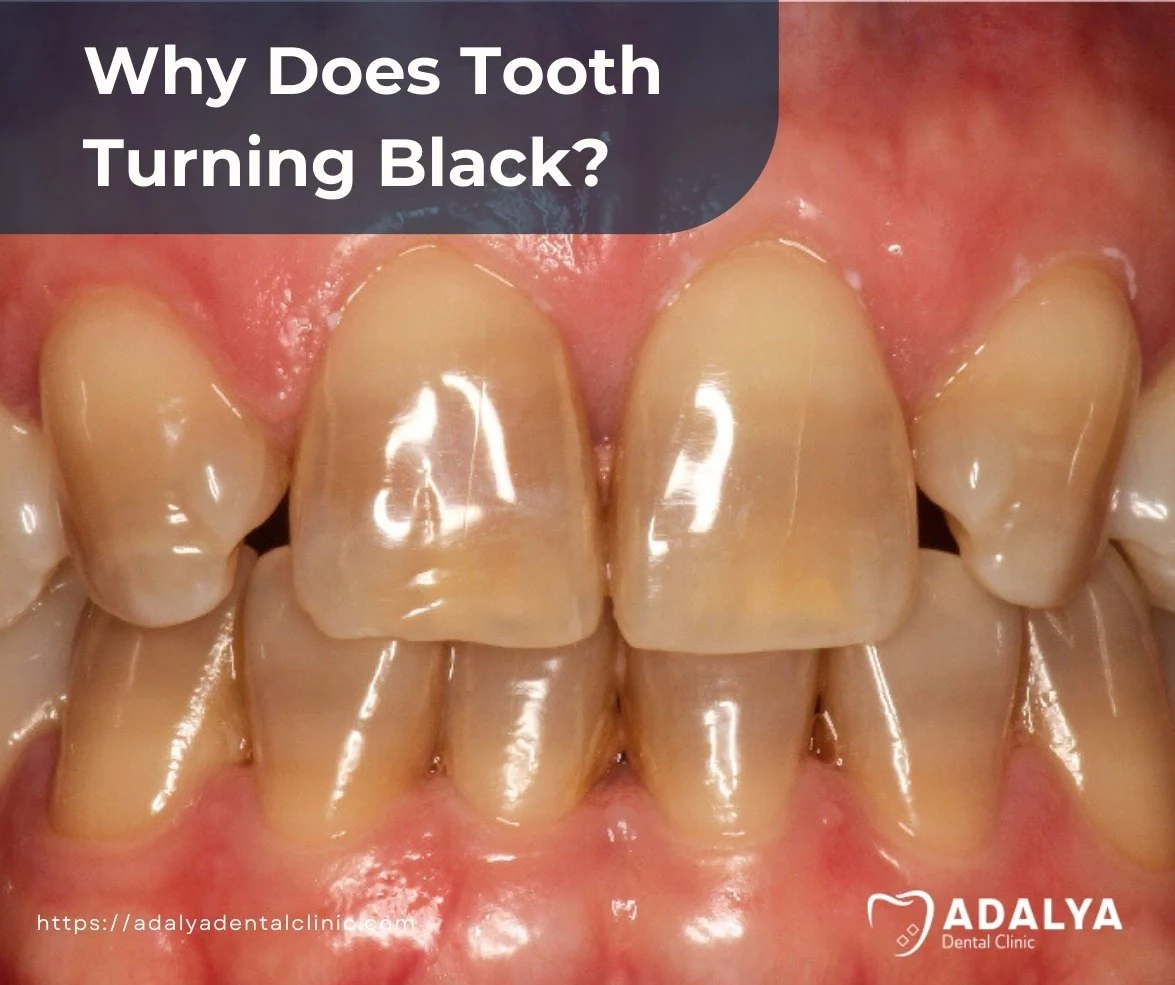
Teeth can turn black for several reasons even with no pain, and the cause can range from harmless surface staining to more serious dental problems. Tooth decay, dead teeth, smoking, coffee, tea, wine, certain medications, tartar (calculus) buildup, previous dental treatments, or poor oral hygiene are all common causes of tooth turning black.
In this article we will explain all the details of tooth discoloration, how to prevent it in the early stages, and all the dental treatment solutions.
Understanding The Tooth Turning Black
Tooth turning black occurs in various ways and affects overall oral health and aesthetic appearance. However, each type has its own specific causes and symptoms.
There are 2 types of tooth discoloration: intrinsic discoloration and extrinsic discoloration.
- Intrinsic Discoloration: This involves the inner structure, or dentin, of the tooth.
- Extrinsic Discoloration: It occurs on the outer layer or enamel, caused by external factors.
Intrinsic discoloration is often harder to treat. It may result from internal damage or exposure to certain medications. However, extrinsic discoloration typically arises from lifestyle choices. Foods, beverages, and tobacco are common culprits.
Why Does a Tooth Turning Black?
Tooth discoloration, particularly black teeth, can be a distressing and concerning issue. So, understanding the causes and solutions for this condition is essential for maintaining optimal oral health and a confident smile.
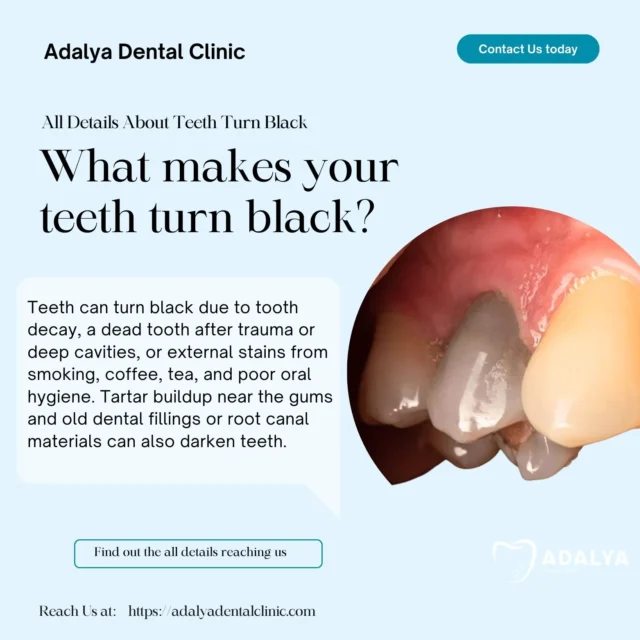
Teeth can turn black due to tooth decay, a dead tooth after trauma or deep cavities, or external stains from smoking, coffee, tea, and poor oral hygiene. Additionally, tartar buildup near the gums and old dental fillings or root canal materials can also darken teeth.
1 – Tooth Decay and Tissue Loss
Advanced tooth decay is one of the most common causes of tooth discoloration. As decay progresses, the tooth tissue may lose vitality, causing the tooth to appear dark brown or black.
In patients who report that their tooth has turned black, deep and previously unnoticed cavities are often detected during examination.
2 – Tooth Death After Trauma
After a blow or impact to the tooth, the nerve tissue may become damaged. As a result, the tooth gradually loses vitality and changes color.
However, trauma-related tooth discoloration is often painless, which is why it may go unnoticed for a long time.
3 – Black Discoloration at The Gum Line
If the blackening appears mainly at the gum line, it is commonly associated with tartar buildup, gum recession, or old metal-based fillings. So, when gums recede, the tooth root becomes exposed and may darken over time.
Similarly, the metal substructure of older restorations can cause dark shadows near the gum margin. This condition should be evaluated both for aesthetic reasons and overall gum health.
4 – Color Change After Root Canal Treatment
Teeth that have undergone root canal treatment may darken internally over time. This occurs because the tooth is no longer vital and can lead to aesthetic concerns.
However, this discoloration can often be effectively managed with dental crowns.
5 – Smoking, Coffee, and Pigmented Foods
Long-term smoking and frequent consumption of coffee or tea can cause permanent staining of the tooth enamel. These factors typically affect multiple teeth. If only one tooth turns completely black, it usually indicates a different underlying problem.
3D Smile Design Technology with Adalya Dental Clinic
Great Results in Dental Implants & All Treatments in Turkey
Check Out Our Tooth Implant & Review Page
Can A Tooth Turning Black With No Pain?
Pain may not always be present when a tooth turning black, especially if the nerve has already lost its vitality or if the discoloration is external.
However, the most common cause of tooth discoloration is a dead tooth. In these cases, the tooth sensation is generally normal and there is no pain. In dead tooth problems, the tooth gradually turns from gray to black over time.
But there are other causes of painless tooth discoloration that should be considered, such as tartar buildup or gum recession.
Causes of Tooth Turn Black With No Pain?
A tooth can turn black (or dark gray) without causing any pain, and this is actually quite common. However, the reason why it’s happening matters a lot. Because the approach and treatment options differ depending on the causes of tooth discoloration.
The table below summarizes common problems and treatment options.
| Causes of Tooth Turn Black With No Pain | Pain Level | Treatment Option |
|---|---|---|
| Dead or Dying Nerve | Painless | Root canal + Aesthetic Restoration |
| Tartar and Plaque Buildup | Painless | Professional Dental Cleaning |
| Old Metal Fillings | Painless | Filling Replacement |
| Gum Recession | May Cause Sensitivity | Gum Treatment + Restoration |
| Tooth Decay | Painless in The Begining | Filling or Root Canal Treatment or Restoration |
If a discolored tooth has suffered excessive material loss and cannot be saved with dental crowns, extraction is the only alternative. After extraction, we can offer our patients solutions using dental bridges and implants in Turkey.
Contact Us > Whatsapp
Effective Treatment Options For Teeth Turning Black
Addressing teeth turn black often requires professional intervention and once the cause of tooth discoloration is clearly identified, a personalized treatment plan should be created. Because not all blackened teeth are treated the same way.
The chosen method depends on the source of the discoloration and the overall condition of the tooth. Early-stage cases may be managed with conservative approaches, while advanced cases may require restorative treatments.
Treatment Options for Black or Discolored Teeth
1 – Professional Dental Cleaning
If the discoloration is caused by tartar, plaque buildup, or surface stains, professional dental cleaning is often the first and most effective step.
Therefore, black discoloration at the gum line can frequently be controlled with this approach. Regular cleanings help both eliminate existing stains and prevent future discoloration.
2 – Teeth Whitening Treatments
Teeth whitening can be highly effective for discoloration caused by external factors such as coffee, tea, or smoking.
However, when darkening originates from inside the tooth, whitening alone may not be sufficient, and additional treatments may be required.
3 – Root Canal Treatment
Root canal treatment is necessary in cases of pulp necrosis, infection, or nerve damage following trauma. In these situations, the tooth is often painless but gradually turns gray or black.
However, after root canal therapy, internal bleaching may be performed to improve the tooth’s appearance. The goal is to preserve the tooth in a healthy and functional state rather than extracting it.
4 – Veneers and Dental Crowns
If discoloration is advanced or accompanied by significant tooth structure loss, veneers or crowns offer a long-term and aesthetic solution.
Because these restorative treatments improve not only tooth color but also shape and strength, especially for front teeth where natural appearance is critical.
What Happens If a Darkened Tooth is Not Treated?
If tooth discoloration is left untreated, it may lead to more serious complications over time. Especially when a single tooth turns black:
- Infection may spread to the jawbone
- The risk of tooth loss increases
- Chronic bad breath may develop
- Aesthetic concerns become more pronounced
For this reason, any noticeable color change should be evaluated without delay.
looking for teeth packages abroad also?
Affordable Turkey Teeth Package Deals With Us
Check Out Our Pages And Reach Our Expert Team
How to Prevent Teeth From Turning Black
Preventing tooth discoloration begins with solid oral hygiene practices. Also, regular check-ups with your dentist can catch potential issues early prevent teeth turn black.
Daily Practices and Tips For Preventing Teeth Turn Black
- Brush teeth at least twice a day
- Use dental floss daily
- Rinse with water after consuming staining beverages
- Avoid smoking and tobacco products
- Visit the dentist every six months for routine check-ups
Brushing twice a day with fluoride toothpaste, flossing regularly, and using antiseptic mouthwash can help remove plaque, a major cause of tooth discoloration, and prevent cavities.
Limiting the consumption of staining foods and drinks like coffee, tea, and red wine can help keep your teeth white.
Additionally, reducing sugar intake can prevent cavities and discoloration.
Finally, regular dental visits are crucial for early detection and prevention for teeth turn black problem.
FAQ'S
You can find informations for tooth turning black by examining frequently asked questions.
Tooth fillings can darken over time, especially if made from amalgam. These materials may oxidize, causing them to appear black.
One of the most common causes of tooth turning black is tooth decay. When cavities form, bacteria can penetrate deeper layers and eventually lead to dark stains.
Another possible cause is pulp necrosis. This occurs when the pulp, the innermost part of the tooth, dies. As a result, it can darken over time.
Internal bleeding and trauma can also cause discoloration. Injuries can rupture blood vessels inside the tooth, leading to a dark appearance.
Old fillings and restorations made of certain materials can oxidize and darken over time. Furthermore, smoking, poor diet, and inadequate dental care can worsen discoloration.
Decay under a tooth can cause discoloration under a veneer. However, this usually occurs when the veneer doesn’t fit properly.
Bacteria can seep into the gaps, leading to decay and discoloration. Therefore, it’s crucial to address this immediately to prevent further damage.
A gray tooth can be an indicator of pulp damage inside the tooth. However, if the damage is left untreated, it can darken over time.
The darkening process usually indicates that the tooth pulp is dying, leading to discoloration. Consequently, this condition requires urgent dental intervention.
Darkening at the gum line is often a sign of gum disease. It can also indicate decay starting under the gums.
However, poor oral hygiene can worsen these problems and contribute to discoloration. Because this area is prone to plaque buildup and can lead to further complications.
You should see a dentist urgently if:
- One tooth turns black suddenly
- There is swelling or bad taste
- Tooth feels loose
- Gum around it is tender
There are many treatment methods that can help restore the color of discolored teeth. Common options include:
- Tooth whitening: For external stains.
- Veneers: To cover discolored areas.
- Crowns: For severely damaged teeth.
- Root canal treatment: To remove dead pulp tissue.
It is not appropriate to brush the extraction area during the first 24 hours of tooth extraction. However, you can use brushing and mouthwash the day after tooth extraction. In addition, avoid vigorous brushing or flossing until the area has healed.
Tooth turning black overnight is rare, but yes, its possible. This usually happens after severe trauma or injury. The tooth’s blood supply might be cut.
In the case of a sudden and severe infection, darkening can occur overnight. Immediate medical attention is vital. Neglecting it can lead to further damage.
Trauma and serious infections are the main causes of rapid discoloration. However, timely treatment increases the chances of recovery.
The time it takes for a tooth to darken varies considerably. This depends on several factors, including the type of damage. However, sudden trauma can lead to rapid discoloration.
Sometimes, it can take weeks or months for a tooth to darken. This is usually related to ongoing decay or slow pulp death.
A cracked tooth can be more than just a cosmetic issue. Over time, it can lead to discoloration and darkening.
When a tooth breaks or cracks, the enamel layer is damaged. Enamel is the hard, protective outer layer of your teeth. Therefore, damage to the enamel layer can expose the inner layers, making the teeth more vulnerable.